
The Rapid Rise of Hung Cao and the Future of Naval Dominance
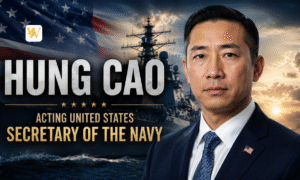
Out here, borders redraw themselves faster than maps can keep up. Standing within that change stands Hung Cao – steady, shaped by fire and purpose. Once a boy carried away from collapsing cities in southern Vietnam, he now walks rooms where global force decisions take shape. Not many bridge war zones and policy halls so completely. Leadership today needs more than rank; it demands lived truth. He earned his through salt-stained decks under desert skies, piloting missions across hostile terrain. Politics tested him too – he stepped into that arena once, seeking wider influence. The navy made him captain, conflict forged him sharper. Freedom isn’t just a word in his story – it’s what pulled him across oceans. Now, helm close to naval strategy’s core, he helps chart direction for fleets that guard distant waters. Arrival wasn’t handed down; each step was fought for.
Right now, the world’s sea routes are caught in a storm of new technology and rising tensions. At this turning point, Hung Cao’s role takes on special weight. His path so far reveals what drives today’s military choices. Hidden inside his experience are clues about how fleets will upgrade, train, and move forward. The decisions made under his watch may set the course for naval power well beyond the present.
Refugee Becomes Navy SEAL Commander
Back then, well before any government job or swearing-in at the Pentagon, Hung Cao already carried scars shaped by war’s reach. Out of Saigon he came, born in 1971, escaping with his family when South Vietnam collapsed in 1975 – only narrowly ahead of the takeover. That loss, sudden and total, stuck deep, fueling a quiet drive to protect the freedoms found in his new home. While younger, time spent in Niger followed, thanks to his father’s work with USAID abroad. Later on, Virginia became the next chapter; school there led him into the first group ever admitted to Thomas Jefferson High School for Science and Technology, where graduation marked one more step forward.
Starting in 1989, his path in uniform kicked off as a seaman recruit – this first move eventually opened doors to the U.S. Naval Academy and a diploma in ocean engineering. Though early days were basic, they set motion for a quarter-century shaped by precision work as a Special Operations officer, focused on deep-sea dives and defusing explosives. Missions pulled him into brutal corners of the planet: war zones like Iraq, Afghanistan, Somalia, places where risk never stayed quiet. While others watched from afar, he handled tasks such as securing famous sunken debris under water, later stepping into leadership at the Naval Diving and Salvage Training Center. Quiet but firm, he became known not through speeches, but by skill shown underwater and respect carried toward those enduring hardship up front.
Navigating the Arena of Modern Political Campaigns
Following his retirement from active duty as a Navy Captain in 2021, Hung Cao felt compelled to enter a new kind of arena: American politics. Motivated by a desire to address what he viewed as systemic failures in foreign policy and domestic governance, he launched high-profile campaigns as a Republican candidate in Virginia. He secured the Republican nomination for Virginia’s 10th congressional district in 2022, and later ran a robust campaign for the United States Senate in 2024.
While these electoral bids did not result in legislative seats, they significantly elevated his national profile. Endorsed by high-ranking party leaders and widely recognized for his charismatic, deeply personal speeches—including an address at the Republican National Convention—Cao resonated with voters by blending his military expertise with an unwavering, conservative defense of constitutional freedoms. His political journey showcased a rare ability to bridge the gap between complex military realities and the everyday concerns of American citizens. This unique combination of battlefield credibility and political acumen caught the attention of the executive branch, paving his path back to the Department of Defense.
Stepping Into the Helm of the Pentagon
In early 2025, President Donald Trump nominated Hung Cao to serve as the 35th United States Under Secretary of the Navy. Confirmed by the Senate and sworn into office in October 2025, Hung Cao quickly took charge of critical, cross-departmental portfolios, focusing heavily on modernizing unclassified information technology infrastructures, refining defense business networks, and boosting quality-of-life initiatives for sailors and Marines downrange.
However, the true test of his leadership arrived in April 2026. Following the abrupt departure of the Secretary of the Navy, Hung Cao was immediately tapped to step up as the Acting United States Secretary of the Navy. Assuming command during a highly volatile period marked by active military operations, Cao wasted no time in asserting authority. In his very first week, he demonstrated a decisive management style by initiating sweeping administrative course corrections, rolling back previous restructuring efforts, and realigning the Navy’s intelligence and security apparatus to optimize agility and direct oversight.
Charting the New Course for Global Maritime Readiness
As Acting Secretary, Cao has clearly articulated a triad of non-negotiable priorities designed to maintain absolute maritime dominance: delivering top-tier equipment and support to active-duty forces, prioritizing robust shipbuilding, and ensuring the absolute defense of the homeland. Central to this strategic vision is aligning the Navy’s procurement with the administration’s ambitious “Golden Fleet” initiative, an industrial effort aimed at revitalizing domestic shipyards and introducing next-generation surface combatants, such as heavily armed battleships, to fill critical operational gaps.
Simultaneously, Cao is navigating a tense global environment that requires balancing immediate combat readiness with long-term strategic deterrence. Testifying before Congress, he has defended complex budgetary decisions and clarified necessary operational pauses on foreign military sales to ensure that American forces remain fully stocked with the precision munitions required for active theaters. From counter-drone innovations to adapting to the quantum speed of modern digital warfare, Hung Cao’s tenure is defined by an urgent push for institutional adaptability. His evolution from a young refugee to the civilian commander of the Navy highlights a leader who understands exactly what is at stake on the global stage, ensuring that the fleet remains ready to confront the threats of tomorrow.