
The Bridge to Professional Empowerment: Aurora Faundo’s Vision for Global Learning
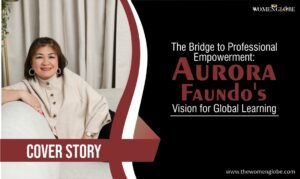
The morning sunshine illuminates the brick-red colored clamped glass windows of the modern campus at Douglas College as Aurora Faundo readies herself for a session that will take her students beyond traditional textbooks. The divide between what is taught in a classroom, in this part of the Greater Vancouver area, and what is required in a modern corporate boardroom once student leaves college and enter their professional space can often feel wide. Aurora has spent over twenty years ensuring that this divide vanishes for her students. Her doctorate in education and an MBA honed her to bring a depth of knowledge grounded in both theory and the reality of high-stakes business operations and to inculcate that wisdom in her discipline.
Her career has been a journey through diverse landscapes of leadership. She has managed multi-store operations, led international relations, and served as a program head. This variety of experience allows her to speak to her students not just as an instructor, but as a consultant who has navigated the complexities of human resource management in the real world. As a Chartered Professional in Human Resources, she uses her designation to bring a level of professional discipline to the curriculum. She understands that the future of business is not just about profit margins, but about the people who drive the mission forward.
A Collective Approach to Industry Integration
Because of this understanding, Aurora designs her courses and personalizes her strategies accordingly. This is keeping in mind student success in the end. As a Business Management Instructor at Douglas College, it is important that she not only keeps herself updated with current industry trends but also recognizes that she cannot do it alone if she also wants her students to be updated. She believes in a collective effort of providing students with a fully rounded education. She does this by inviting industry professionals to either speak to her classes or be interviewed by her students. This way, students can easily grasp the current industry trends and see them directly through the eyes of the industry professionals. She also intentionally meets up with her network of practitioners on a regular basis, locally and during her travels to other countries where her network exists. Having these regular conversations about issues, trends, and practices has always been very helpful in her own personal and professional development. These conversations eventually find their way to her classrooms through discussions and shared experiences.
Outside of her teaching roles, Aurora was active as a corporate trainer, and she continues to serve as a subject matter expert. Through her knowledge and experience gained from working with her current employer, she can continuously evaluate current trends within the labor market. With globalization (the emergence of free trade) comes increasing volatility within the global economy; thus, she adjusts her own approach to meet the needs of her students for future career success. Alongside students, she develops a culture that integrates both curiosity and discipline into their everyday lives.
Bridging Academic Theory with Real-World Application
Aurora views education as a bridge. The academic rigor of research and study on one side complements the fast-paced environment of modern industry that lays on the other side. She empowers her learners by connecting these two worlds for them so that they can step into their careers with more than just a degree. They take the lessons learned from their classroom along with the practical wisdom required to make effective decisions and manage others in a humane manner. Her work is local, but she is also involved in helping to develop how educational programs are delivered globally through large interdisciplinary projects by providing expertise as well as training to those who participate and are involved in developing educational programs abroad.
Each workshop that Aurora conducts is typically characterized as an opportunity to provide some level of support, guidance, or motivation to the students who attend, while also acting as a platform for students to engage in discussion about maintaining a trust-based culture through a merger between two companies or developing employee talent in a remote/telecommuting environment; and she consistently challenges her students to consider the social implications (human consequences) of any given situation or decision made by a business. Success to her is not only measured in terms of individual growth, but also by the ability of the business (institution) that students will eventually lead to continue to grow. Also, she believes that the design of an organization’s learning environment will be a part of building a productive and resilient society.
The Liberating Power of Global Education
With over two decades in post-secondary education, understanding the lived experiences of how students from different countries view and eventually achieve their educational goals and outcomes has strongly influenced the educational philosophy of Aurora. In 2013, she wrote an essay about The Ultimate Goal of Education. In that essay, she compared three different educational experiences of students from three different countries. The first where education is viewed as a tool for liberating a family from poverty and a generation of economic hardship, the second where education is viewed as an edge to compete with others so that an individual’s success is more guaranteed in the future. Lastly, in more affluent and rich countries, students are presented with more options, and education is a choice rather than a requirement. In each of these cases, education is liberating individuals.
As the afternoon begins, Aurora sits down with a group of international students to discuss a new curriculum project. In a foundational management class, she and her fellow professors are examining ways to provide meaningful, industry-driven examples to be included in the class. As each professor shares their perspective, she listens and seeks to determine how best to apply the various customers and industries to the unique culture of each student in the course, and considers various ways to build rapport with each student. Leaning in, she describes a particular situation experienced during the course of her consulting work, and observes the excitement on her students’ faces as they relate the concept to an actual experience in their lives.
In the past few years, her classroom has also been filled with international students who bring with them years of industry experience. She ensures that these students talk about them in class discussions, so they learn from each other’s expertise and stories. These, she thinks, represent a collective effort that brings the industry practices into the classroom. Her work always emphasizes bridging academic knowledge with real-world application. Whenever she plans her curriculum and teaching strategies, it always involves them, the real-world applications. For example, in her human resource management courses, students learn how to develop selection interview questions that are based on a proper understanding of laws and legislation. They will also role-play by pretending to be an interviewer and a job applicant so they can operationalize the selection interview questions they prepared.
Preparing Confident Professionals for the Future
Aside from that, if they are taking her training course, they should be able to develop actual training materials and execute them accordingly, as if it were an actual training program. Applications must always support knowledge, and that helps prepare them for the world of work ahead. As an educator, she feels she has done her job well when students feel more confident after taking the course.
Strategies for the Internationally Diverse Classroom
Teaching internationally presents a unique challenge altogether – from tailor fitting content to the region where the students are attending the course to managing the classroom where norms and behaviors are understood differently. Aurora believes that to manage an internationally diverse classroom is to understand firstly the student demographics. That includes age, gender, some background, and level of eloquence in a language, and access to technology, among others. Some of this basic information has always enabled her to prepare her instructional materials and strategies well and understand the kind of classroom management strategies to use. Then, just the same, she always ensures that academic knowledge is coupled with real-world application because every student should always be prepared for the challenges of their future workplace.
The Mastery of Human Resource Leadership
According to Aurora, HR leaders must always be passionate team players and good decision-makers. Managing people always requires a great deal of people-oriented activities and decision-making, both simple and complex ones, daily. She believes that when one masters these soft skills, they can easily navigate the HR profession. Educators play a critical role in shaping globally competent professionals. That starts by setting an example in how an educator values diversity in their classrooms, starting from course content to actions and behaviors that are noticed by students.
Cultivating Global Competence and Openness
With traveling becoming more accessible to a greater number of people everywhere, and the internet making working anywhere a viable option, educators must therefore strongly integrate the value of working with a diverse group of people and openness to new experiences, so students are well prepared for global challenges ahead. Aurora adds that three leadership principles guide her work across teaching, administration, and international collaboration.
- Establishing intentional and genuine relationships with the people she works with and interacts with.
- Honoring her commitments.
- Being grateful for every opportunity she is given.
Professional Standards and Instructional Quality
The CPHR designation of Aurora and her working for Douglas College, which is a partner institution with CPHR BC & Yukon, has influenced her approach to teaching human resource management a great deal. Aligning curriculum and course content with the CPHR areas of competencies, which are heavily influenced by industry trends and employer expectations, serves as her basis for choosing the teaching strategies that will support the competencies. Thus, influencing the quality of course delivery. Moreover, being a member of an established reputable organization like the CPHR provided easy access to professional development training that supports her needs as an educator.
Navigating the Future of AI in Education
Looking ahead to 2026 and beyond, Aurora foresees many trends shaping the future of business education. Like any industry, artificial intelligence, or AI, is posing real challenges to business education. It is shaping the way they work and the way they teach, the way students learn and process information. However, an educator’s openness to embracing AI and finding ways for these tools to smoothly find their way into the course content and delivery will make a difference in how the students perceive its value in their learning and thought process.
The Legacy of Genuine Connection and Excellence
As ‘The Most Iconic Woman Transforming the Future in 2026,’ recognition’s experience has taught her that establishing genuine relationships with people around her, with those that she works and deals with, will always go a long way. She just wants people to remember her as a good person who always gave her best in everything that she did and was never shy to help out when an opportunity called for it.