
Caroline Fiddler: Simplifying Fertility Treatment
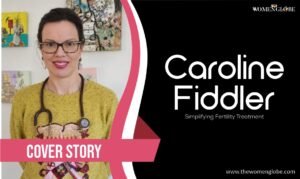
How personal experience with fertility clinics led Caroline to rethink the way patients receive, organise and follow treatment instructions!
Fertility treatment can leave patients with a long list of instructions at exactly the time when they already have enough to think about. What happens when those instructions are difficult to follow, change from one stage of treatment to another, or arrive as another photocopied sheet of paper?
For Caroline Fiddler, this was more than a question. She experienced it herself while going through fertility treatment and changing doctors and clinics. What she found was striking. Even when the care around her improved, the way treatment information was delivered remained much the same.
Her second, and ongoing, fertility specialist was proactive and part of a small, cohesive team. Caroline found the experience reassuring because she had a doctor and team she could trust and rely on. Yet when it came to treatment instructions, she came across something familiar: the same overly photocopied, inflexible, paper-based system she had seen with her previous doctor, who had been part of a large clinic.
That experience made Caroline think about what patients were expected to manage alongside everything else that comes with fertility treatment. Instructions can be complex, time-sensitive and overwhelming. Patients need to know what to do, when to do it and how to keep track of everything across a treatment cycle. Caroline felt there needed to be a better way for clinics to communicate vital information and for patients to keep track of their own treatment instructions.
The idea for CycleGuide began to take form from there.
Caroline had been thinking about a simple organiser app, and repeated cycles with a trustworthy doctor gave her the push to explore the idea properly. She began making sketches and looking into app companies, trying to work out how the concept could become something patients could actually use.
The starting point for CycleGuide came from a very practical observation: patients can receive excellent care and still struggle with the way information reaches them. Caroline saw an opportunity to make that part of fertility treatment simpler, giving patients greater peace of mind and a greater sense of control when they have a lot to keep track of.
That small idea, born from her own experience, became the beginning of CycleGuide.
Where IVF Patients Need More Support
The practical demands of fertility treatment can be surprisingly extensive. Patients may have to coordinate appointments, blood tests, ultrasounds and procedures around work and family responsibilities, while also managing several medications at precise times and dosages.
Caroline believes the biggest gaps in fertility treatment are communication and support between appointments. Patients have a high degree of responsibility during fertility treatment. They must coordinate appointments, blood tests, ultrasound booking and procedures with other responsibilities at home and work.
Medication can make the process even more demanding. Patients may have to self-administer multiple different medications on the correct day and time, while storing them at the correct temperature and using an accurate dosage. Some injectables require assembling needles onto pre-filled pens, dialling up the correct dose, or mixing powder with sterile water and drawing up the correct volume.
All of this takes place while patients and their loved ones are dealing with the underlying uncertainty and worry that treatment may not be successful and that their options may be limited.
Technology, Caroline believes, can give patients greater control over their treatment. There are many variables beyond a person’s control. A patient cannot control their age, whether they have a partner or whether their eggs are compatible with the sperm of a partner or donor. One aspect that is within their control, however, is how accurately they carry out their treatment instructions.
Caroline experienced that distinction herself. Knowing that she had done her part correctly gave her peace of mind and helped her cope with negative outcomes at the end of a cycle.
CycleGuide was developed around that need. The standalone app provides patients with a simple way to enter and keep track of their treatment tasks, with reminder notifications through the app store for individual patient use. It can also help clinics and staff because patients who are more relaxed and make fewer mistakes place less pressure on the system.
The integrated clinic version takes the support further by sending treatment instructions directly to patients’ phones. Information can be provided at the beginning of the cycle and, importantly, throughout the cycle when instructions change. Patients may otherwise receive multiple calls from nurses with verbal instructions but no written confirmation.
CycleGuide therefore focuses on simplifying treatment tracking, medication schedules and patient education, addressing the part of fertility care that patients have to manage largely on their own.
Deciding What the App Should Do
Once Caroline identified the most stressful part of the treatment journey, the next challenge was deciding what CycleGuide should leave out. Fertility technology can easily become overloaded with features, particularly when developers try to accommodate every administrative and clinical need in one platform.
Caroline deliberately chose to focus on treatment instructions alone. She decided not to include paperwork such as consent forms and financial invoices. The initial product was developed as a patient-based app, essentially the minimum viable product, with the clinic interface developed later.
Treatment instructions, she felt, represented one of the most stressful parts of IVF because patients tend to be relatively young and healthy, with limited interaction with the healthcare system. Many have few medications in their daily lives and may have no previous experience with injections.
Everything can therefore feel new and anxiety-provoking. Patients are partly responsible for carrying out the treatment correctly, while simultaneously carrying the enormous hope of becoming pregnant and eventually having a healthy live birth and a rewarding life as a parent. Caroline sees that as a huge burden to carry.
Cycles are around two weeks in duration, making the treatment period particularly intense. Improving those two weeks became her primary focus.
Keeping the app simple required considerable restraint. Existing apps could look impressive, offering the ability to sign consent forms, pay fees, chat with other patients in support groups, track sequential results in detail and watch embryos develop, or not develop, in the laboratory in real time.
Some apps also included little frivolous creatures, catchy phrases with exclamation marks and overly pink or dark backgrounds. Caroline heard many suggestions about what CycleGuide could include, but deciding what was genuinely necessary required confidence.
The goal remained clear: make the app simple and useful during the most stressful part of treatment.
Designing From a Patient’s Perspective
Clinical accuracy is essential in healthcare technology, but Caroline also understood that accuracy alone would not make an app useful. The person opening the screen might be sitting at home surrounded by medications, instructions and unanswered questions.
Keeping the patient at the centre was therefore critical to her design process. Whenever she was unsure how to approach a particular feature, Caroline returned to an image of herself sitting on her bed during her first cycle, surrounded by medications and instructions.
It was an egg collection cycle, and Day 1 fell on a Saturday. She had to decide whether the menstrual flow was sufficiently heavy to count as Day 1. Her first injection was then required on a Sunday, when the clinic was closed.
Caroline had her phone propped up, playing a video from her clinic demonstrating how to perform an injection. She remembers feeling very alone and dismayed at home. Her family was supportive, but everyone was perplexed and anxious.
That experience gave her a very practical reference point for the app. She began by sketching screenshots and making lists of features.
After looking into different app companies, Caroline committed to one with an office in Melbourne. She brought multiple paper treatment instructions, freezer bags and paper bags full of medication and spread everything across the large wooden table in the meeting room.
Looking at the collection of materials, she told the designer Sharon and project manager Jarrod, “there has to be a better way.”
They agreed, and the team began bringing the idea to life. Jarrod later offered advice that Caroline found particularly useful: “Have you ever wanted an app that is more complicated? No. You just want it to do the basics really well.”
It was advice she followed.
Lessons From a Fragmented Healthcare System
Developing CycleGuide also reflected frustrations Caroline had encountered throughout her medical career. Moving an idea from concept to healthcare technology was exciting, scary and exhilarating, particularly because she had previously experienced considerable hesitation around innovation within healthcare.
During her work in several public hospitals across Australia, Caroline had suggested simple ways to streamline processes. Only one senior colleague acted on one of her ideas. He listened, embraced the suggestion and enthusiastically started implementing it the following day, with very positive results.
Her wider experience was less encouraging. Hospitals can be weighed down by convoluted systems that are incompatible within the same institution and between hospitals in the same region. Some use different Electronic Medical Record systems, while others rely on paper records or a mixture of paper and digital record-keeping.
Hospitals may also rely on lengthy and unreliable faxes when patients are transferred between hospitals, alongside pagers for contacting staff, including urgent calls. Caroline gives the example of calling a stroke team at a tertiary hospital for urgent advice from a regional health service.
Those experiences reinforced her decision to create a simple, purpose-built design rather than attempting to solve every healthcare technology problem at once.
Building the Core Patient Experience
The first prototype was designed around a small number of practical decisions. Caroline wanted the main screen to show a whole-month calendar because fertility cycles are generally around two weeks long. Beside it, she wanted a list of the tasks that needed to be completed that day.
Putting both elements on the same screen allowed patients to see what they needed to do immediately while understanding where those tasks sat within the wider cycle and month.
Entering Day 1 would automatically number the following days with sequential numbers. Caroline kept the daily task list short and based it on the main requirements across different types of fertility cycles: Day 1, medication, blood tests, ultrasounds, procedures and appointments.
Blood tests and ultrasounds were deliberately kept separate from appointments. Caroline felt that placing them under an appointments category would create an unnecessary additional step.
The visual design followed the same philosophy. The background was white and clean, with pastel colours representing different tasks as bars across each calendar day.
Flexibility was equally important. Every task could easily be changed, edited or deleted. Caroline knew this mattered particularly for medications because, from her own experience, medications often change during a cycle. Their duration may shorten or extend, and doses may need to be adjusted.
Why Medication Was Kept Flexible
Medication management could have become one of the most complicated parts of the app. Caroline instead chose to make it deliberately straightforward.
Patients can enter the name of their medication using free text. Caroline felt that creating a long list of medications would make the app more complicated because trade names vary and change over time. Maintaining such a database would also create additional work.
There was another concern. Patients could easily click on the wrong medication in a long list. Caroline therefore decided to abandon the dropdown approach altogether.
She had noticed that other apps tended to use long medication lists, but she considered the approach fraught. Free-text entry also made CycleGuide more adaptable to different countries where medication names and trade names can differ.
The same thinking influenced the way different procedures were handled. Caroline decided to keep the tasks and workflow the same across all procedures and cycle types.
Rather than asking patients to select their cycle type at the beginning, she considered what all cycles had in common. Egg collections, intrauterine insemination and embryo transfers all contain similar basic components.
Patients could therefore choose the cycle or procedure type towards the end of the cycle, when preparation for the procedure is raised by their nurse. At that stage, specific instructions become relevant, such as giving a trigger injection on a particular date and time, fasting from midnight, arriving at the surgical day hospital at a specified time and arranging for someone to collect them afterwards.
Again, the objective was to make the experience as user-friendly as possible.
The Question Behind Every Feature
Throughout development, Caroline kept returning to one question: what features are essential, and what will work well in real life for all patients?
One feature she eventually added was not essential, but she felt it could be genuinely helpful: a pre-cycle checklist.
Caroline asked one of her project managers whether it was acceptable to indulge in adding the feature. The project manager compared the idea with her own previous experience working for a knitting app, where the team had decided that some features were not vital but were short and provided a real bonus, so they were worth including.
Caroline recognised a similar opportunity with fertility treatment.
Patients need to prepare for Day 1, but they never know exactly when Day 1 will arrive. Day 1 is often defined as when menstruation reaches full flow, yet menstrual cycles are not always 28 days long.
The timing can also be affected by the oral contraceptive pill, which may be used to coordinate treatment with clinic dates. Caroline experienced this herself because of legalisation in Victoria that required her to transfer to NSW for embryo transfers because she was using overseas donor eggs given her age.
Preparation can therefore be complicated. Patients may need medication from specialist pharmacies located in limited areas and operating during limited hours. They may need to watch a video explaining how to inject medication before Day 1. They also need to feel confident about deciding whether Day 1 has actually arrived, particularly if it occurs on a weekend or public holiday when clinic opening hours are limited and medication may be required the following day.
The pre-cycle checklist was designed around precisely those practical realities.
Making Digital Communication Work Harder
As fertility treatment increasingly moves toward personalised pathways, digital platforms have an opportunity to connect patients, partners and clinics more effectively. Caroline sees the next stage of fertility technology as a combination of better communication tools and systems that reduce the amount of information patients and staff have to carry in their heads.
Her vision includes streamlined communication and paperwork through portals, dashboards, purpose-built Electronic Medical Records integrated with a patient-friendly app.
Reminders can support both patients and staff, reducing the mental load associated with IVF. For Caroline, the value lies in making communication clearer and reducing the chance that an important instruction is forgotten, misunderstood or delivered only verbally.
Measuring Impact Beyond Downloads
Technology companies often measure success through downloads, engagement and usage figures. Caroline’s own measures are much more personal.
A compliment from a patient or fertility staff member is deeply rewarding for her because it provides direct evidence that CycleGuide has helped someone navigate treatment.
Interest from fertility companies is another form of endorsement. Companies that arrange international IVF and surrogacy have approached her about offering CycleGuide as part of a premium package to support their patients. Emerging fertility EMR software developers have also shown interest.
Recognition within the fertility field has added another dimension. CycleGuide was shortlisted for the ESHRE Care Awards at the organisation’s recent annual conference in London.
For Caroline, these moments matter because they indicate that the platform is being recognised for its practical contribution rather than simply attracting users.
Earning Trust from Fertility Clinics
Healthcare technology has to earn trust from clinicians as well as patients. Caroline has found that credibility comes more readily through practical honesty than through polished promotional language.
She prefers being down to earth and sharing real experiences rather than repeating the same phrases commonly found on social media.
Her approach with clinics is similarly restrained. She does not push them to adopt CycleGuide. Instead, she discusses what the platform can offer, explains the workflow and integration involved, and focuses on how it would fit into the clinic’s existing processes.
A particularly important concern is workload. Fertility nurses are already busy, so Caroline believes it is essential to demonstrate that the app would add only a negligible workload to their staff, particularly the nurses who would be most closely involved in patient communication.
The Reality of Becoming an Entrepreneur
Moving from practicing medicine to building a healthcare company required Caroline to adjust to a professional culture with very different expectations.
Business, she says, is very different from being employed as a doctor in a public hospital. In the latter environment, colleagues may occasionally mislead one another, but generally people are honest because they have to be. What someone says is usually what they mean.
Business can be different.
Caroline experienced situations where people appeared enthusiastic about CycleGuide and raised her hopes despite seeming to know that they had no intention of using the app. On some occasions, she spent several thousand dollars as a consequence, only to never hear from those people again or later learn that they had changed their minds at the last minute.
Marketing provided another difficult lesson. She recalls being very disappointed by a marketing package that was presented as targeted and useful but turned out to be generic, unhelpful and much less focused than she had been led to believe.
Those experiences have become part of her understanding of entrepreneurship. Building a mission-driven healthcare company requires dealing with uncertainty not only in the product and market, but also in the people and businesses around it.
The Unexciting Side of Fertility Innovation
The most visible fertility innovations tend to involve advanced laboratory technology, new devices or developments that sound immediately high-tech. Caroline sees a different area of fertility care that still needs significant attention.
Fertility innovation remains underserved in the unexciting, unglamorous parts of treatment: paperwork, phone calls and basic clinic processes.
Improving those processes may not sound catchy. It certainly does not have the same appeal as introducing a new laboratory device. People can therefore be underwhelmed when the conversation turns to improving administrative and communication systems.
For Caroline, however, the basics are important precisely because they affect patients and staff every day. Inefficient processes can weigh people down and create opportunities for mistakes.
The technology may appear simple. The consequences of getting the basics wrong can be much bigger.
The Conference Moment She Never Forgot
Every entrepreneurial journey includes moments when an idea is dismissed before it has had a chance to prove itself. Caroline experienced one particularly painful example at a fertility conference several years ago.
She attended the event and spoke with fellow attendees about her new app. She could not afford the $6,000 cost of having a stall as an exhibitor, so she simply talked about CycleGuide.
Three well-dressed female specialists laughed at her for producing an app. They heckled her, saying that such apps already existed and questioned why she had spent so much time and money developing what they considered an unnecessary and superfluous product.
Caroline remembers feeling upset and humiliated.
A few years later, one of the companies that the most outspoken doctor worked for contacted Caroline. The company was interested in CycleGuide because it was dissatisfied with its own patient app.
The experience offered an unexpected form of validation. A problem that some people had dismissed was still a problem when they eventually experienced its shortcomings themselves.
The Cost of Fertility Treatment
If Caroline could influence one major change in global fertility care, her answer would focus on expense.
Fertility treatment is expensive, and there is no guarantee of success. Some programmes, including certain premium surrogacy packages, offer guarantees, but ordinary fertility cycles generally do not.
Medicare in Australia certainly helps with cycle fees and medications, yet fertility treatment remains very expensive. Caroline also points to embryo transfers, which involve a procedure lasting around 15 minutes. She understands that considerable work takes place behind the scenes, but from the patient’s perspective, the expense can feel out of proportion to the treatment itself.
Private health insurance does relatively little to reduce the cost because much of the fertility treatment pathway takes place at home or in an outpatient setting.
The financial barrier saddens Caroline because it can prevent people from having something she describes as very natural and part of the human condition simply because they cannot afford it.
Starting Conversations About Fertility Preservation Earlier
The question of cost also connects with Caroline’s interest in fertility preservation. She would like fertility preservation to be discussed with all young women rather than becoming a conversation only when someone is already concerned about declining fertility.
One practical opportunity could be during university. Students beginning long degrees that lead to demanding careers may find that professional commitments eventually push parenthood further into the future.
Caroline believes an egg collection in a woman’s twenties, perhaps during university holidays, could be easier than taking time away from work later in life. It could also be more cost-effective because a younger woman is likely to obtain more eggs of higher quality from one cycle.
The idea is relevant to all young women, not only university students. Caroline’s broader point is that fertility information should reach people early enough for them to understand their choices.
Holding on to the Reason for Innovating
After building CycleGuide through clinical experience, personal experience, scepticism and setbacks, Caroline’s advice to aspiring healthcare innovators comes back to the reason an idea existed in the first place.
When uncertainty sets in, she believes innovators should return to why they had the idea in the first place and who they wanted to help.
She encourages people to have the courage of their convictions and try not to be dissuaded by people who do not have the same insight into a problem.
In her view, the healthcare system may genuinely be broken even when the people working inside it do not see it that way. They may simply have become accustomed to the problem or learned how to work around it every day.
For Caroline, that distinction matters. Familiarity with an inefficient system does not make the system efficient.
A Second Opinion Can Change the Journey
For people currently navigating fertility treatment, Caroline’s advice is more personal. If someone is unsure whether their fertility doctor or clinic is right for them, she recommends getting a second opinion.
IVF can take a long time because of the nature of treatment itself. Patients can therefore find it difficult to determine whether a lengthy treatment journey is simply part of IVF or whether shortcomings in their treating team are contributing to the delay.
A second opinion may confirm that the current team is doing everything correctly. It can also provide the clarity needed to recognise that a different approach is necessary.
Caroline is particularly glad that she changed doctors herself. She does not believe her first doctor was proactive or sufficiently invested in her success. She felt there was no long-term plan or contingency plan, and that the same approach continued with little analysis or opportunity to stop, take stock and change direction.
Her ongoing doctor has given her a very different experience. Caroline describes her as approachable and rigorous, someone who thinks laterally, works hard, has a sense of humour and maintains a good working relationship with her close-knit team.
Above all else, Caroline trusts her.
For someone whose own experience of fertility treatment led her to build technology around clearer instructions and less uncertainty, that trust remains fundamental. CycleGuide can help organise treatment, reduce mistakes and make communication easier. The human relationship between patient and clinician still sits at the centre of the journey.