
Bernadett Tresó: Nurturing Change-Resilient Organizations Through People-Centered Leadership
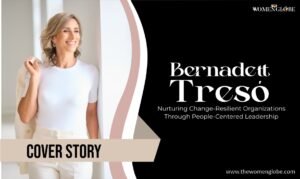
Turning Transformation, Leadership Development, and Sustainable Human Performance into Lasting Organizational Change.
It is interesting how much time organisations spend preparing for change, and how little of that preparation seems to account for the person who has to live through it. A new strategy can make perfect sense on paper. A transformation can have clear goals, careful planning and every step mapped out. Yet when the change reaches the people, something different can happen. People hesitate. They worry. They lose trust. Sometimes, they simply do not know where they stand anymore.
Perhaps that is because change is usually discussed in terms of what the business needs to achieve. What needs to change? How quickly can it happen? What will it improve? We ask these questions because they are important. But there are other questions that are harder to put into a plan. Why do people respond so differently to uncertainty? What makes someone trust a change? What allows people to feel psychologically safe while everything around them is shifting?
These are questions Bernadett Tresó found herself returning to throughout her career.
She had worked for years in international teams and transformation projects, alongside very different kinds of leaders. Over time, she saw how strongly leadership could shape business performance, culture and the way people experience change. The more she observed, the more curious she became about the human side of transformation.
Then her own life changed.
Significant changes in her personal life led Bernadett to make a conscious decision to leave the corporate world. After years of working in international teams and transformation projects, her priorities had shifted. She wanted greater flexibility, creativity and purpose.
Leaving the corporate world also gave her the opportunity to bring together everything she had learned. As an economist, she had built her experience through business and project work. She later complemented it with education in change management, coaching and leadership development.
Today, Bernadett looks at transformation through both lenses: the business objectives and the people experiencing the change. Perhaps that is what makes her perspective so grounded. She understands that behind every organisational transformation, there are people trying to understand what the change means for them, and finding their way through it.
Leading Through Human Change
As organizations move through digitalization, automation and AI while responding to constantly changing markets, leadership is increasingly being judged by how well people can navigate those shifts. Technology can change the way work is done, but transformation also changes how people think, communicate, make decisions and perform.
For Bernadett, people-centered leadership begins with understanding that distinction. Organizations are continuously responding to changing markets, digitalization, automation and AI, yet while they invest heavily in technology, the human side of transformation is still often overlooked.
Change creates uncertainty, pressure and stress, influencing how people think, communicate, make decisions and perform. People-centered leadership means recognizing that people do not simply implement change, they experience it.
Beyond hard and soft skills, Bernadett believes future leaders need strengthened meta-skills: self-awareness, adaptability, critical thinking, emotional regulation, resilience and the ability to learn and unlearn. In an increasingly complex environment, leaders cannot rely only on what they already know; they must be able to navigate what they do not yet know.
Her understanding of that human complexity has been shaped by working across several European cultures, where leadership expectations can differ considerably.
Learning Across Borders
International leadership brings an immediate lesson in perspective. What builds trust in one workplace may have a very different effect in another, and assumptions about authority, communication and change can quickly become limitations when leaders work across borders.
Living and working across Hungary, Germany, Austria and Switzerland taught Bernadett that there is no single leadership style that works everywhere. People communicate differently, build trust differently and respond differently to authority, uncertainty and change.
She experienced cultures with strong psychological safety and others where it was missing. Those experiences reinforced her belief that competence and humanity are not opposites. Effective leadership combines expertise with empathy, cultural awareness and adaptability.
Most importantly, international experience taught her to remain curious. Future-ready leaders do not need all the answers, but they need the willingness to continuously learn, question their assumptions and evolve.
That cross-cultural perspective also helped Bernadett recognize a broader weakness in how organizations were approaching transformation.
Creating TRESO Transformation Services
As organizations invested heavily in technology, Bernadett noticed that comparatively less attention was often being given to the people expected to absorb and sustain continuous change. The gap went beyond communication or training. It touched leadership, wellbeing and the ability of people to maintain sustainable performance throughout transformation.
She saw organizations investing heavily in technology while giving comparatively less attention to the people expected to absorb and sustain continuous change.
Traditional change management provides essential communication, stakeholder engagement and training. Bernadett saw the need for a more integrated approach connecting transformation, leadership development and sustainable human performance.
Her own experience with prolonged stress also taught her how directly wellbeing influences the ability to think, decide and perform. This became part of the inspiration behind TRESO Transformation Services.
For Bernadett, the human side of transformation is not a “soft” addition to the business case. It is part of the business case.
Having identified the need for a more human approach, she also became interested in what separates organizations that successfully navigate transformation from those that struggle to make it last.
Making Transformation Stick
Organizations can introduce new technology, processes or structures relatively quickly. The harder task is creating enough shared understanding and ownership for those changes to become part of how the organization actually operates.
Bernadett believes successful transformation begins with a clear and shared purpose. People need to understand why the transformation matters, where the organization is going and how they contribute.
The second factor is genuine involvement. Transformation cannot simply be designed by a small group and communicated to everyone else. It requires dialogue, stakeholder engagement and visible leadership commitment.
She also sees resistance as valuable information rather than simply an obstacle. It can reveal uncertainty, fear, conflicting priorities or practical concerns.
Ultimately, technology may enable transformation, but people determine whether it becomes sustainable organizational change.
The human response to change also determines whether organizations can maintain demanding performance standards without exhausting the people responsible for delivering them.
Balancing Results and Wellbeing
Performance expectations do not disappear during transformation. If anything, they often become more demanding. Bernadett therefore places importance on the conditions in which people are expected to deliver those results.
She does not see performance and wellbeing as opposites. People are more likely to contribute, innovate and perform sustainably when they feel respected, psychologically safe and connected to meaningful purpose.
This does not mean lowering expectations. Organizations still need clear goals, accountability and results. The question is whether the way those results are achieved is sustainable.
Leaders therefore need to pay attention not only to productivity, but also to human capacity and energy. Behind every KPI and business result, there are human beings creating those results.
Protecting that human capacity becomes especially important when employees are being asked to move through uncertainty, which makes trust and psychological safety central to effective leadership.
Earning Trust During Uncertainty
Change can create fears that are not always visible in organizational plans. People may worry about their autonomy, competence, status or sense of belonging, and those concerns can shape their response long before leaders see an obvious problem.
For Bernadett, transparent communication is essential, but equally important is understanding what lies behind resistance.
Instead of immediately asking, “How do I overcome this resistance?”, leaders can ask, “What is this resistance telling me?”
Leaders do not need every answer. They need to communicate honestly about what they know, what they do not yet know and what happens next.
Trust develops through transparency, consistency and genuine two-way dialogue. People are more likely to move forward when they feel heard and understand the purpose behind the change. Helping leaders handle those moments requires more than a change-management framework. It also requires space for reflection and guidance that is grounded in experience.
Growing Leaders Through Change
Leaders are expected to support others through change while often navigating the same uncertainty themselves. Bernadett sees this as particularly challenging for middle management, positioned between strategic decisions and employees’ concerns.
Change management provides practical frameworks for stakeholder engagement, communication, resistance and adoption. Coaching creates space for leaders to reflect on their own responses, while mentoring adds practical guidance based on experience.
For Bernadett, the goal is not simply to help leaders manage change better, but to help them grow through change themselves.
The need for that development is becoming even more significant as AI changes work and places greater value on capabilities that technology cannot fully replicate.
Strengthening Human Capabilities
As AI becomes more capable, Bernadett believes distinctly human capabilities will become increasingly valuable.
Critical thinking will be essential. AI can process information and generate recommendations, but humans must understand context, question assumptions, exercise judgement and take responsibility.
Empathy, listening and coaching skills will also become more important as people continuously adapt to new technologies and roles.
Awareness of personal strengths and limitations will matter as well. AI does not need recovery and does not burn out, while humans do. Future leaders must therefore understand how to combine technological productivity with sustainable human performance.
Her understanding of human capacity is also rooted in the personal experience of building an independent practice in Switzerland.
Developing an Independent Practice
Entrepreneurship places professional ambition alongside a continuous process of personal development. Building an independent practice requires a person to define a direction while also confronting the beliefs, limitations and patterns that can influence how that direction unfolds.
For Bernadett, building an independent practice has been as much a personal development journey as a professional one. Finding her purpose, defining her vision and building a business around it required her to understand not only the market, but also herself.
Entrepreneurship confronts people with their own beliefs, limitations and patterns. Building trust has also required patience and consistency because transformation, leadership and mentoring services depend strongly on credibility.
She has learned that a “no” does not always mean an idea is wrong; sometimes the timing is simply not right.
Her confidence has grown through navigating setbacks, learning, adapting and continuing to build something she genuinely believes in.
Those experiences have strengthened the leadership philosophy she now brings to her work with others.
Starting With Self-Leadership
Supporting others begins, in Bernadett’s view, with understanding oneself. Leaders who recognize their own beliefs, emotions and behavioural patterns are better equipped to understand how those factors shape their decisions and affect the people around them.
She has learned that leading others starts with being able to lead oneself.
Self-awareness is at the heart of good leadership for Bernadett. Understanding beliefs, emotions and behavioural patterns helps leaders recognize how they influence their decisions and their impact on others.
Rather than immediately offering solutions, she creates space for reflection and asks questions that help people access their own answers.
She also no longer sees professional performance and personal wellbeing as separate. Her philosophy is therefore greater awareness before action, because awareness enables more conscious decisions, authentic communication and empathetic leadership.
From that foundation, she identifies three qualities that future leaders will need to carry into an increasingly uncertain working world.
Three Foundations for Future Leadership
Future leadership requires more than technical expertise. Bernadett believes leaders need an internal framework that helps them remain grounded while navigating uncertainty, responsibility and continuous change.
The first quality is purpose and authenticity. Knowing purpose and values provides an inner compass. Even when circumstances require decisions that are not fully aligned with personal values, this awareness helps leaders consciously navigate those tensions, remain authentic and communicate transparently.
The second is a growth mindset. Leaders need to recognize opportunities within challenges and use setbacks not only as professional lessons, but also as opportunities for personal growth. They can role-model curiosity, openness and the willingness to continuously develop.
The third is holistic leadership. Performance and wellbeing are deeply interconnected. Leaders need to understand how stress, energy and physical and mental wellbeing influence decision-making, relationships and sustainable performance.
Future leaders must deliver results while creating environments where people can perform and grow without sacrificing their wellbeing. For women seeking to lead or build businesses, those principles also provide a basis for remaining ambitious without losing sight of personal values.
Building Influence Authentically
Ambitious women often have to navigate the tension between building influence and remaining true to themselves. Bernadett believes the starting point is continued self-discovery rather than waiting for a point at which everything feels settled.
Her advice is to “never stop discovering yourself.” People are never completely ready or fully developed, and there is always another layer of themselves to understand.
She encourages women to invest in personal growth because the growth of leadership, business and impact starts with their own development.
Surrounding themselves with people who are more experienced or further ahead can provide inspiration and learning, while also helping women become deeply aware of their own strengths, values and limitations.
She also encourages finding partners and experts who share the same mindset and values. Collaboration, in her view, should replace unnecessary competition. People can support one another, challenge one another and create opportunities for one another.
Being conscious of where time and energy are invested is equally important. Bernadett advises women not to spend too much of either trying to prove their value in environments where they constantly feel too much, not enough or unappreciated.
Knowing one’s value means choosing environments where it is possible to contribute authentically and continue growing. That principle of authentic leadership became particularly meaningful when Bernadett was recognized as “Switzerland’s Most Iconic Woman Leader of 2026.”
Redefining What Leadership Looks Like
Recognition harbors a particular significance for an expatriate building an independent business in Switzerland, where creating a professional identity can require considerable courage and persistence.
Bernadett feels truly honoured by being recognized as “Switzerland’s Most Iconic Woman Leader of 2026,” particularly as an expat building her own business in Switzerland. The recognition reminds her of the courage required to build something from scratch without an established professional network or significant support system.
She also sees the recognition as an opportunity to reinforce a broader message about women in leadership: true confidence does not have to be loud, and competence and kindness are not opposites.
Women can be ambitious and empathetic, strong and caring, determined and feminine at the same time. Bernadett hopes women will stay true to themselves; know the value they bring and enjoy being women in business.
She believes the future of women in leadership should not be about fitting into existing definitions of what a successful leader should look like. Women should have the confidence to expand those definitions and lead in their own way.
That belief ultimately feeds into the larger purpose she wants TRESO Transformation Services to serve.
Generating Change-Resilient Organizations
Bernadett’s long-term vision for TRESO Transformation Services brings together the themes that have shaped her leadership philosophy: transformation, human performance, wellbeing, self-awareness and organizational resilience.
Her vision is to help build change-resilient organizations where people feel valued, supported and psychologically safe to perform at their best.
She sees TRESO Transformation not simply as a consulting service provider, but as a trusted transformation partner. The strongest partnerships emerge when vision, values and intentions align, allowing the creation of sustainable value rather than simply the delivery of a service.
Bernadett strongly believes that healthy leaders build thriving organizations. Self-aware and resilient leaders are better equipped to create environments where people can grow, contribute and navigate uncertainty.
The legacy she would like to create is organizations that become stronger through change, combining transformation expertise with genuine care for people. For Bernadett, the principle is ultimately simple is: sustainable transformation happens when business performance and human wellbeing strengthen each other.