
Dr. Edmary Altamiranda: Patterns in the Deep
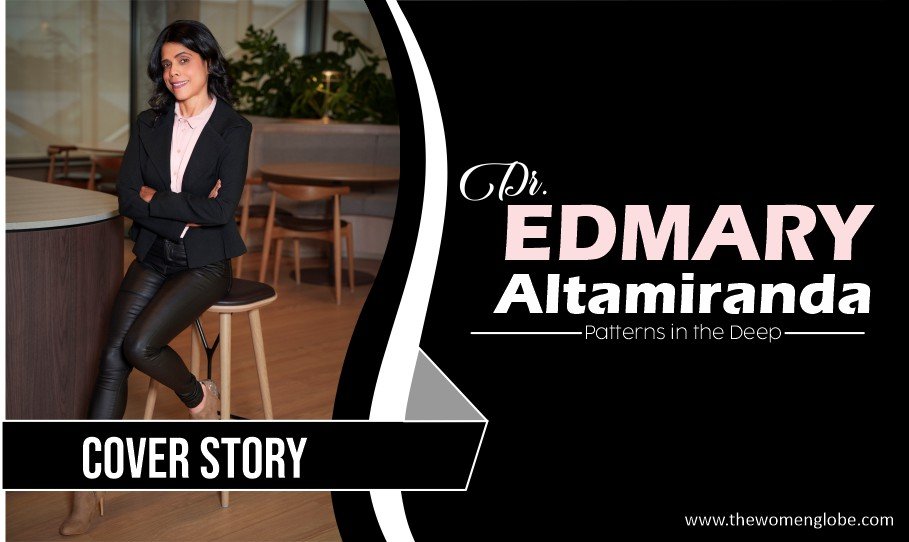
Bringing intelligence and systems thinking to solve some of the most demanding subsea challenges!
When we watch waves lap against the shore, it is easy to forget how much work happens beneath the surface. The ocean hides systems and movements that most people never see, yet these systems form our lives in ways we rarely notice. For Dr. Edmary Altamiranda, understanding hidden patterns has been a lifelong fascination.
Her journey began in Venezuela, exploring how data and machines could reveal what humans cannot measure directly. During her Systems Engineering studies in the 90’s, a summer job in the petrochemical industry—later extended into her thesis – provided her the first exposure to AI. This sparked her lasting interest in intelligent systems, and her curiosity led her to pursue an MSc in Control Engineering, and a PhD in Applied Sciences focused on Intelligent Control Systems applied to petrochemical processes. Each academic and professional milestone deepened her understanding of how to make complex systems work better, safer, and smarter.
Over time, she combined roles in academia, research, and industry across Colombia, Sweden, and Norway, turning ideas into real-world solutions . At Aker BP ASA, she leads Technology and R&D projects focused on subsea technology. For her, every challenge is a puzzle to solve, an opportunity to combine innovation with practical impact. Beyond machines and data, she sees the people involved, the researchers she mentors, the teams she collaborates with, and the broader impact on society.
Dr. Altamiranda finds inspiration in solving problems where others see only obstacles. Her approach blends curiosity, persistence, and imagination, turning complex systems into understandable, practical and usable solutions. She sees science not simply as a means to build tools, but as a way to improve lives and create meaningful impact.
Watching the ocean’s rhythm, she sees more than waves. She sees patterns, connections, and opportunities to make a difference. Her work teaches us that even the most hidden systems can be understood, improved, and guided by thoughtful exploration. Every project she undertakes carries a spark of curiosity and purpose, reaching far beyond machines and measurements to touch people, teams, and the broader society.
Let us walk through her journey:
How Personal Philosophy Shapes Engineering in Subsea Systems
Over decades of working with control systems in subsea environments, Dr. Edmary Altamiranda has witnessed engineering transform alongside rapid technological advancements. Engineering has transitioned from optimizing control systems and analyzing time series and signals to extracting insights from complex, multi-dimensional data to create smarter, adaptive systems. Advances in cyber-physical and digital technologies have expanded the data landscape to include 3D scans, images, simulations, and real-time streams.
This transformation requires a System of Systems approach, where interconnected systems, technologies, and processes function in a holistic manner. Dr. Edmary’s philosophy has shifted from seeing data as a byproduct to valuing it as a strategic asset. By combining insights across disciplines with domain expertise and advanced analytics, engineers unlock higher levels of performance and innovation. Modern engineering demands scalable, resilient solutions that break silos and generate value across multiple domains. The field remains a dynamic, interdisciplinary journey that continues to inspire her.
Timeless Principles in Process Control
Reflecting on work in process control during the 1990s provides insight into principles that remain essential, even amid today’s digital transformation. A principle that has remained timeless is the importance of strong foundational domain knowledge. In the 1990s, solving control challenges required a deep understanding of process behavior, physics, and engineering fundamentals, a requirement that continues to hold even greater significance today.
With the rise of AI, there is a tendency to view algorithms as silver bullets, yet without domain expertise, models often fail to deliver meaningful results. Early in Dr. Edmary’s career, she learned that technology should enhance proven engineering principles and methods to create value.
This mindset shaped her PhD on intelligent control systems and continues to guide her approach to innovation. The true value of AI arises when it is combined with solid technical foundations and real-world context. Digital transformation encompasses more than technology; it also relies on competence, shared purpose, collaboration, and the ability to embrace and inspire change.
Balancing Analytical Rigor with Visionary Experimentation
In intelligent control systems, leaders in R&D face the challenge of balancing analytical rigor with visionary experimentation. Dr. Edmary Altamiranda believes creativity and rigor are complementary. In complex domains like subsea technology, creativity without technical grounding can lead to impractical, unreliable, or unsafe solutions. She begins with a strong foundation, understanding the state of the art, validating assumptions, and researching proven methods.
This empowers purposeful innovation. Once the foundation is set, she encourages experimentation through hybrid AI models, digital twins, evolutionary computing, and other relevant emerging methods. To ensure reliability, her approach uses structured yet flexible qualification frameworks, supported by iterative testing and simulations.
This approach combines the discipline needed for safety, reliability, and performance with the creativity that drives breakthroughs. It is about building trust in innovation to ensure it is visionary while also robust, scalable, and aligned with real-world needs.
Exploring Subsea Communication and Intelligent Field Architectures
Subsea wireless communication and intelligent field architectures represent highly complex and specialized domains. They require persistent innovation and a drive to explore both technical and conceptual boundaries.
Underwater wireless communication offers a transformative opportunity to harvest data from subsea infrastructures at a potential fraction of the cost of wired sensors. It is vital for asset integrity monitoring, life extension of mature fields, and enabling autonomous operations that improve safety and reduce costs.
The motivation for intelligent field architectures stems from the limitations of traditional manual concept engineering, which narrows the solution space and slows technology evaluation into projects. Intelligent screening and optimization expand design possibilities, accelerate technology integration, and support uncertainty quantification, key to robust, data-driven decisions.
Dr. Edmary Altamiranda is driven by practical innovation, rather than industry hype, and focuses on solving real project and operational challenges. Staying ahead means combining technical rigor with creativity to deliver scalable, impactful solutions. These niche areas are where meaningful transformation happens, and that is what keeps her inspired.
The Human Edge in an AI-Driven World
As technology advances and control environments become increasingly autonomous and AI-driven, questions arise about the continuing relevance of human judgment. In this landscape, the human role shifts from direct operation to strategic oversight, ethical judgment, and creative problem-solving.
Algorithms excel at processing vast datasets and optimizing within defined parameters, yet human intuition and technical expertise outperform in areas where context is ambiguous, data is incomplete, or decisions require balancing technical outcomes with broader business, societal, or environmental considerations.
Humans act as architects of autonomy, designing frameworks, validating assumptions, and interpreting emergent behaviors that algorithms may not fully anticipate. Intuition allows recognition of patterns beyond historical data, challenges model biases, and envisions innovative solutions. Humans remain essential for guiding purpose, ensuring resilience, and assuring the outcomes of AI-driven systems.
Fostering Systems of Systems Thinking in Engineering Teams
Cultivating a System of Systems mindset begins with establishing a shared understanding of the broader context. Dr. Edmary Altamiranda emphasizes that every system, whether control, communication, process, or analytics, functions within an interconnected ecosystem where decisions in one area influence others.
To make this idea tangible, her teams employ standard modeling languages such as SysML, maintain rigorous requirement traceability, and clarify dependencies and interfaces across disciplines. These practices, together with cross-functional design reviews, scenario-based discussions, simulations, and emulations prior to real-world testing, encourage teams to move past siloed approaches and embrace a holistic system of systems thinking. Dr. Edmary Altamiranda has also published several contributions on this approach, underscoring its value in complex subsea and autonomous operations.
Convincing Others of Intelligent Automation
Applying AI before it became mainstream created unique challenges across industries. In the petrochemical sector, adoption progressed more smoothly. This industry provided the first exposure to AI in 1994, during the development and implementation of virtual measurements, and later supported the execution of her PhD research on intelligent control systems. Efficiency gains in this context had a direct impact on profitability and close collaboration and deep expertise helped manage trust effectively.
In contrast, upstream industry including subsea sectors initially faced skepticism regarding reliability, safety, and integration when shifting toward intelligent control and autonomy.
Establishing trust has become essential: trust in the technology, its validation, and its safe operation in complex environments. Building this trust requires rigorous simulation, incremental deployment, and transparent communication.
Today, the abundance of AI can paradoxically challenge trust. Successful adoption depends on aligning innovation with business priorities, value creation, trustworthiness, and risk appetite. Intelligent automation must demonstrate its practicality, reliability, safety, and transformative potential.
A Moment That Shifted Understanding of Subsea Reliability
Sharing a moment that fundamentally shifted her understanding of subsea system reliability and maintenance prediction, Dr. Edmary Altamiranda explains: Her core approach to subsea reliability and maintenance prediction has remained consistent, emphasizing data-driven, system-of-systems approaches where reliability and maintenance predictions are grounded in system understanding, validated models, condition monitoring, fault detection, and diagnostics.
Otherwise, predictions may risk misleading results. However, working closely with stakeholders has shown that success depends as much on user trust and practical usability as on technical robustness. Real impact comes when predictive tools are accessible, transparent, and truly fit the needs of engineers onshore and offshore.
The feedback loop from end users has become just as critical as the underlying algorithms, fundamentally shaping how improvements are prioritized and how success is measured in reliability and maintenance prediction. That insight continues to guide her work, ensuring predictive maintenance is both technically sound and operationally trustworthy.
Adapting Innovation from Academia to Industry
Reflecting on her transition from academia to industry leadership and how it shaped her approach to innovation and experimentation, Dr. Edmary Altamiranda shared insights from her experience. Her first transition from academia to industry occurred in 1994, when she developed virtual instruments using neural networks for the petrochemical sector.
Her work has always relied on data rather than purely on theoretical models, yet entering the industry highlighted that innovation must remain robust, scalable, and deliver measurable value under operational constraints. In this environment, experimentation evolved into an iterative and collaborative process, centered on stakeholder needs, risk management, and continuous feedback. Real-world integration requires solutions that succeed in practice as well as in theory.
Dr. Edmary Altamiranda shifted from academic exploration to driving practical impact grounded in a strong technical foundation, ensuring that innovation remains technically sound, operationally relevant, and trusted by those who rely on it. This approach continues to guide her leadership in R&D and technology projects today.
Misconceptions About Digital Twins in Subsea Technology
As digital twins take on a central role in predictive analytics and operational management, their implementation in subsea technology often carries misunderstandings. A common misconception suggests that digital twins are merely sophisticated 3D models or dashboards connected to data.
In reality, they function as dynamic, data-driven, multidomain, and multidimensional systems that integrate real-time, heterogeneous, and multimodal data to generate actionable insights and respond to the complex, system-of-systems nature of subsea assets. Many professionals overlook the importance of establishing a solid descriptive foundation before predictive and prescriptive analytics can provide meaningful value.
Successful implementation depends on high-quality, real-time, and synchronized data, rigorous model validation, and clear communication of uncertainty to ensure reliability. Digital twins must align with real user needs and workflows to encourage adoption and trust. The combination of technical rigor and stakeholder alignment is what unlocks true value. This approach holds relevance across other domains and complex systems.
Creating Synergy Across Disciplines
Collaboration lies at the core of joint industry programs, where multidisciplinary experts often speak different “engineering languages.” Joint academic–industry programs define research and development priorities and enable co-creation with broader impact. They form the next generation of professionals through shared vision and clear objectives. Synergy among multidisciplinary experts begins with understanding the bigger picture and valuing each discipline, which lies at the heart of Systems Engineering.
Dr. Edmary Altamiranda emphasizes the use of standard modeling languages, frameworks, and protocols to bridge different “engineering languages” and make systems accessible across domains. She promotes open communication, scenario-based discussions, and a culture of mutual respect and curiosity. This approach encourages experts to share perspectives, use cases, and requirements, challenge assumptions, and recognize diverse contributions. By combining structured frameworks with a collaborative mindset, diversity and inclusion become a genuine source of innovation.
What Drives Curiosity in Technological Innovation
After 3 decades leading advancements in oil and gas automation, Dr. Edmary Altamiranda continues to find inspiration in the evolving world of subsea technology. What keeps her curiosity alive each morning is the opportunity to push the boundaries of the state of the art and mentor the next generation of professionals through her R&D role
Equally central to her motivation is the power of collaboration. Dr. Edmary Altamiranda actively fosters synergy between scientific and industrial communities, believing that meaningful transformation happens when diverse sectors and disciplines unite around a shared purpose.
Subsea technology is a constantly evolving industry, and each day presents a new frontier, whether it is intelligent field architectures, underwater wireless communications, digital twins, or hybrid AI models for intelligent controls and autonomous systems. She is driven by practical, value-driven innovation that solves real project and operational challenges rather than trends or hype. Staying ahead of the curve means embracing creativity grounded in technical rigor. That balance keeps her inspired and motivated.