
Dr. Moneshia Dashiell: A Calling Rooted in Healing and Hope
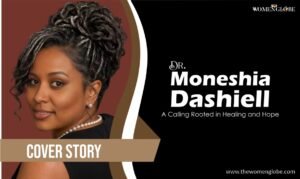
How Dr. Moneshia Dashiell is Transforming Children’s Wellbeing Through Compassion, Clinical Insight, Faith, and Purpose.
Childhood trauma often leaves lasting marks, yet many children grow up without the support needed to understand or overcome what they have experienced.
Dr. Moneshia Dashiell has devoted her work to addressing this gap, helping young people find strength, clarity, and hope through compassionate care. Her journey began in Albany, Georgia, where early observations of the burdens placed on children formed her understanding of the challenges they face.
Those experiences gradually deepened her commitment to creating safer, more supportive spaces for healing, while her work persists to draw attention to children’s emotional needs and the importance of recognising their struggles at an early stage. Her story replicates how personal insight, professional purpose, and a genuine concern for young lives can come together to create meaningful change in the field of child wellbeing.
The Moment Which Shaped Her Calling
Before a person understands what they want to do with their life, they often encounter something that changes the way they see the world. It may be brief, but its effect can remain for years, gradually becoming a direction that feels impossible to ignore.
Dr. Dashiell remembers such a moment clearly, not because it was dramatic, but because it was defining. She saw a child, no older than seven, sitting alone on a playground bench while the other children ran and laughed around her, her hands folded tightly and her eyes dimmed by something she could not name.
At the time, Dr. Dashiell did not have the language to describe depression, anxiety, or trauma. She only understood that the child’s spirit was hurting, and in that instant, something awakened within her: a calling, a vow, and a quiet declaration that she would become the kind of woman who could help children reclaim the light that life had tried to steal. That moment became the spark that formed every step she took thereafter.
As she grew older, the desire that began with that encounter developed into a more complex understanding of what helping children would require, gradually showing her that the work could not be confined to one discipline or approached from a single perspective.
A Journey Woven Across Disciplines
Many professional paths are built around specialisation, with people encouraged to choose one field, develop expertise in it, and remain within its boundaries. Dr. Dashiell’s journey developed differently, with several areas of knowledge eventually becoming part of the same purpose.
She discovered that her path would be a braided journey involving education, psychology, and faith. Although these fields are often treated as separate worlds, she came to understand that a child’s healing and a child’s learning are closely connected: a child cannot rise academically while struggling emotionally, just as a child may find it difficult to believe in the future when they are unable to cope with the present.
This understanding led her to become fluent in both the science of the mind and the language of the soul, drawing clinical knowledge from her doctorate in psychology, developmental insight from her experience in early childhood education, and compassion, discernment, and courage from her faith. She carried these together into difficult situations involving children and families who needed more than strategies; they needed hope.
With these three strands shaping her approach, Dr. Dashiell moved into clinical practice, where the challenges children face often emerge through behaviour, silence, fear, or changes that adults may struggle to understand.
Learning to Look Beneath the Surface
Children rarely have the vocabulary to explain everything they are experiencing. Their distress may appear through changes in behaviour or performance, while the deeper reason remains hidden from those around them, making the ability to understand what lies beneath the surface an essential part of supporting them.
In her clinical practice, Dr. Dashiell meets children who carry storms inside them, with depression silencing their laughter, anxiety tightening their chests, and trauma rewriting their sense of worth. Yet alongside these struggles, she continues to witness the remarkable resilience children possess when someone takes the time to truly recognise them.
One truth has determined her entire career: a child begins to rise when they feel safe enough to be seen. They need adults who listen without judgement, speak life into their identity, and remind them that their story is still being written, while offering the reassurance that they are not alone in the process. The importance of recognising a person’s worth eventually extended beyond her clinical work and became equally significant when she entered a leadership position that carried meaning for many young women who had rarely seen themselves represented in such spaces.
When a Professional Milestone Became a Symbol
There are appointments that mark personal progress, and there are others that carry a much larger meaning. For people who have historically seen few individuals like themselves in positions of authority, such milestones can change what they believe is possible.
Dr. Dashiell experienced this when she became the first African American woman to serve as Country Director for Global Women Youth Leaders USA. When she received the appointment, she felt two things at once: profound gratitude and profound responsibility.
She was grateful for the honour, while remaining conscious of the girls who would look at her leadership and see a mirror of possibility. For her, the achievement was never simply about holding a position; it was about representation and standing in a place where no woman who looked like her had stood before.
She also felt responsible for ensuring that the door would never again close behind her. She harbours those young women in her heart and wants them to understand that leadership is not about being the loudest voice in the room, but about being anchored, authentic, and committed to lifting others while rising oneself. That same sense of responsibility informs the way she approaches knowledge, belief, and the different forms of understanding that influence her work.
Bringing Science and Faith into the Same Conversation
The relationship between clinical knowledge and spirituality is often approached with caution, as practitioners must consider professional boundaries while recognising that people bring their beliefs, values, and personal experiences into the process of healing.
Dr. Dashiell’s approach has always been faith-centred and trauma-informed, a combination that some may consider unconventional. She believes science explains the wound while faith restores meaning, science provides tools while faith gives courage, and science treats symptoms while faith strengthens the spirit.
She does not force faith into the clinical space, nor does she remove science from the sacred space. Instead, she honours and integrates both with integrity, sensitivity, and respect, encouraging fellow therapists to approach them with the same balance and care. For Dr. Dashiell, healing cannot be reduced to a formula; it is a relationship. That understanding of the importance of connection eventually found another expression through her writing, allowing her to reach people who might never enter her clinical practice.
Writing for Those Who Care for Others
The people responsible for children’s wellbeing are often expected to remain patient, capable, and composed, even when their own responsibilities become overwhelming. Their work is essential, yet the exhaustion and uncertainty they experience can remain largely unseen.
Writing became another extension of Dr. Dashiell’s calling. As an author of children’s books and resources for parents, teachers, and caregivers, she writes with one intention: to give weary adults a place to breathe.
She understands that parenting, teaching, and caregiving are sacred work, but they can also be exhausting, overwhelming, and lonely. When she writes, she imagines a parent sitting at a kitchen table late at night, wondering whether they are doing enough, as well as a teacher standing in an empty classroom after dismissal, replaying the day and questioning their impact.
Through her writing, she wants to remind them that their presence matters more than their perfection. She offers practical tools, while also hoping her work provides comfort to adults who may need reassurance as much as guidance. Over the years, her work brought formal recognition, yet the achievement she values most is connected to a moment that could never be displayed on a shelf.
The Recognition Which Matters Most
Professional accomplishments are usually recorded through awards, certificates, titles, and public acknowledgements. These honours recognise effort and achievement, but they rarely capture the private moments that reveal why the work matters.
Dr. Dashiell has received several honours, including the President’s Lifetime Achievement Award, the Global Educator Award, multiple Hall of Fame inductions, and other recognitions that line her shelves, and she remains grateful for each one.
However, the award that lives closest to her heart is not made of metal or glass. It is a moment involving a young boy who once came into her office unable to speak above a whisper, after trauma had taken his voice and fear had taken his confidence.
For months, they worked slowly, gently, and patiently. Then, one day, he looked up at her with eyes full of courage and said, “Dr. Dashiell, I think I can try again.” That sentence remains her truest award, because for Dr. Dashiell, healing is measured through restored lives rather than accolades. It is this understanding of individual change that also determines her concern about the wider conditions affecting children and the responsibility society carries towards their wellbeing.
Making Children’s Mental Health a Priority
The challenges children face are influenced by the environments around them. Families, schools, communities, healthcare systems, and policymakers all have a role in determining how quickly difficulties are recognised and what kind of help becomes available.
When Dr. Dashiell considers the state of children’s mental health today, she sees both urgency and hope. She believes children need greater access to mental health support, more trauma-informed classrooms, culturally responsive care, and more adults who understand that emotional wellness is foundational.
If she had five minutes with policymakers, she would urge them to invest in children’s mental health as though the future depends on it, because it does.
Despite the seriousness of the situation, she remains hopeful. She sees a generation of young people who are brave enough to speak about their feelings, honest enough to ask for help, and resilient enough to rise again and again, alongside educators learning new tools, parents seeking guidance, and communities awakening to the truth that children’s emotional health is the main conversation. Her understanding of care and responsibility also informs the advice she offers women who are building careers while carrying the expectations that often come with being relied upon by others.
Leading Without Losing Her Softness
Women in professional and leadership positions are often made to feel that authority requires distance and that warmth may weaken their credibility. The pressure to remain strong can sometimes make it difficult for them to acknowledge the value of tenderness and compassion.
Dr. Dashiell speaks to women in education, therapy, and leadership, as well as those who are still finding their direction, while also speaking to the younger version of herself who was just beginning her journey.
Her advice is to lead boldly without surrendering softness. Strength without gentleness becomes hardness, while gentleness without strength becomes fragility; when a woman leads with both, she becomes unstoppable, a force of healing, a vessel of wisdom, and a lighthouse for others navigating their storms. That image of a lighthouse leads naturally to the question of what she hopes will remain after her professional achievements have become part of history.
Building a Legacy Through Other Lives
A legacy is often associated with what a person builds or leaves behind, but its deeper meaning can be found in what continues through others. The most lasting contribution may exist in the people who carry forward the lessons, values, and courage they received.
50 years from now, Dr. Dashiell hopes people will look beyond her titles and awards and say that she was a woman who helped children find their voices, families find their footing, and communities find their compassion. She wants to be remembered as someone who built a legacy of healing, leadership, and faith that set generations free.
Her journey began with a moment on a playground bench and continues through therapy rooms, classrooms, leadership circles, and the pages of books that carry her heart. She believes the work will continue long after she is gone through the lives of the children who rise, the women who lead, and the communities that heal.
Perhaps the most meaningful part of Dr. Dashiell’s story is the consistency of its purpose. The form of her work has changed over the years, moving through education, psychology, clinical practice, leadership, faith, and writing, but the reason behind it has remained the same. Her titles may record her accomplishments, yet the lives she has helped change offer the clearest measure of what she has built.