
GeM and UN Women Join Forces to Expand Opportunities for Women in Public Procurement
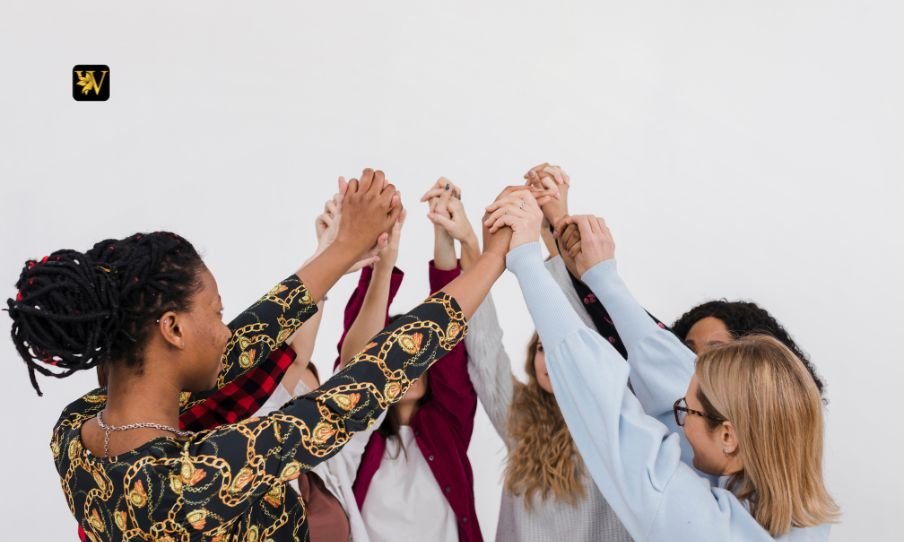
On 20 November 2025, the Government e-Marketplace (GeM) under the Indian Ministry of Commerce & Industry signed a Memorandum of Understanding (MoU) with UN Women.
The purpose: to provide more opportunities for women entrepreneurs to participate and be empowered, with a focus on those coming from the informal sector, in India’s public procurement ecosystem.
The event of the signing of the agreement took place in New Delhi at the GeM office located in the Jeevan Bharti Building. GeM CEO Mihir Kumar was in the chair during the signing of the MoU by UN Women India Country Representative Kanta Singh and GeM Additional CEO Ajit B. Chavan.
Why this matters: context & significance
Basically, the Indian government through GeM is trying to make public purchasing more socially acceptable. GeM is the common platform used by central and state ministries, departments, PSUs and autonomous bodies for the purchase of goods and services.
Working with UN Women, the plan is becoming more and more a gender-responsive procurement, that is, women-led businesses having more opportunities and easier access. Thus, it is in line with setting such goals as Sustainable Development Goal 5 (gender equality and empowerment of all women and girls).
Simply put: it is a deliberate shift of procurement from being merely transactional to procurement as a means of inclusion and empowerment.
Key elements of the partnership
Here are the major areas the MoU covers:
- Training, capacity-building, and best practices: UN Women will create training resources, suggest worldwide best practices, share success stories, and support the definition of validation criteria for women-led enterprises.
- Onboarding and market access: GeM will assist the onboarding of women-led businesses (including Self-Help Groups). It will make procurement categories more user-friendly, conduct workshops, and government buyers will be sensitised.
- Product and sector inclusion: Women entrepreneurs through GeM’s “Womaniya” initiative, can offer their products in diverse categories such as handicrafts, handloom products, jute/coir, bamboo, organic foods, spices, accessories, home décor, office furnishings.
- Regional and vernacular outreach: Focus has been placed on regional language training materials, the mobilisation of women trainers, and the connection with labs and R&D institutes for product-development and market-readiness.
Who benefits and how
First of all, women entrepreneurs, particularly those from the informal sector, and women-led enterprises that have had difficulties in accessing large public procurement contracts will be the main beneficiaries. The collaboration provides them with an easier way to get in touch with government buyers directly through GeM.
Besides that, the partnership through the awareness of government buyers and the creation of a procurement ecosystem that supports gender-responsiveness, aims to bring about a change in the structure, not just a few individual opportunities. It implies that in the long run, this can transform the manner in which business is conducted in public procurement, thus, becoming more inclusive.
The bigger objective and long-term implications
What this really means is a two-fold shift:
- It is doubling the number of micro/SME and women-led business participation in government sourcing by one hand. Meanwhile, it indicates a transition procurement to be used as a policy lever for inclusion and empowerment.
- Such a move is in line with the United Nations Sustainable Development Goal 5, which goal is to advance gender equality and to empower all women and girls.
In the long term:
- The outcome that women-led enterprises flourish via GeM may have the potential to alter supply chains for government procurement in an entirely new way: more localised, more varied suppliers.
- Firstly, it could lead to a radical transformation in the methods by which procurement categories are innovated, the management of onboarding processes, and the delivery of training, particularly in the regional sectors.
- Further, it would be an impetus for other agencies or big buyers to implement gender- responsive procurement frameworks, thus becoming a source of strength for the ecosystem prevailing to the next level.
Potential challenges and things to watch
Of course, there are caveats. Some of the items to watch:
- Onboarding and accessibility: Despite having training and facilitation, women in the informal sector might still have difficulties with scale, compliance, certification, digital literacy, or accessing government buyers.
- Sustained uptake: An MoU being signed is only the beginning; it is the execution and measurable results that count. The extent of change will be reflected in the number of procurement contracts to which women-led businesses have been able to be translated.
- Regional and sector equity: Guaranteeing that less accessible areas, remote locations, or non-traditional sectors are being considered rather than only the ones that are “easy to reach.”
- Monitoring, evaluation and transparency: It will be important for GeM/UN Women to publish outcomes: how many businesses onboarded, contracts awarded, growth trends, drop-offs. Without data the promise may remain symbolic.
- Procurement ecosystem resistance: Sensitising buyers is one thing; changing ingrained practices, biases or procurement norms is a heavier lift.
What to look for next
Given this development, some follow-up indicators to track:
Will they be releasing dashboards or annual reports for GeM statistics on women-led businesses onboarding and contract awards?
Regional breakdowns: What states or sectors have the highest participation? Are there pilot regions?
Funding/support linkages: Besides training, will there be credit/finance support, market access fairs, mentoring networks available as part of the initiative?
Government buyer behaviour: Are ministries/PSUs demonstrating measurable increases in sourcing from women-led enterprises? Are new procurement categories or quotas being introduced?
Scaling of the model: Will this be limited to GeM’s categories or will it extend to service-procurement, infrastructure contracts, larger tenders?
Procurement is a significant step that is often overlooked as a lever for inclusion and empowerment but by merging a national procurement portal (GeM) with a global gender-equality agency (UN Women), the signals are quite evident that India intends to change the way it works here. The real impact will be seen when women-led businesses go beyond onboarding to actually winning contracts, scaling up operations, and becoming a significant part of the supply chain in government procurement.
Read More News: Click Here