
Prof. Laura Mazza: Strengthens Cultural Understanding Across Borders
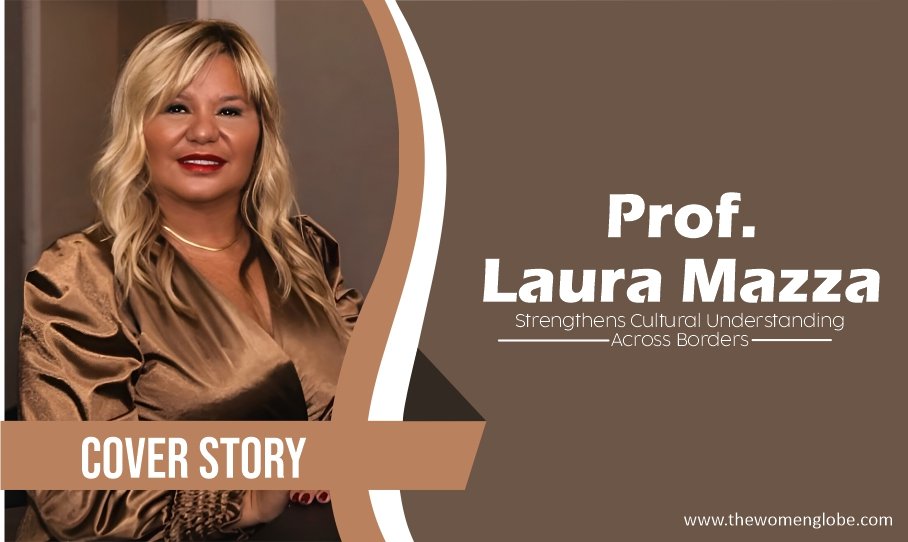
Creating programs that support calm, respectful, and informed dialogue!
Cultural diplomacy grows from simple moments. A shared story. A gesture across languages. A classroom filled with many voices. These moments formed Laura Mazza from a young age. She grew up surrounded by diversity that felt real and close. This early mix of cultures taught her that understanding other viewpoints is more than an idea. It forms the base of calm and cooperative societies.
Laura carried this feeling into her academic life. She believed that education and open cultural exchange help communities move toward a stronger and forward-looking future. These beliefs guided her toward work that joined diplomacy, research, and leadership. As she stepped into each field, she began to see how people connect when space is created for dialogue. She saw how ideas travel across languages and how this flow brings groups together.
Her motivation came from a clear desire to build systems that help people and institutions speak with each other across many kinds of boundaries. Some limits come from language, some from different fields of study, and others from geography. Laura devoted her career to crossing these spaces with care and energy. She shaped programs that strengthen teams, guide governance, and support institutions that aim to grow through shared knowledge.
Over time, cultural diplomacy became more than her field. It became a personal mission. She worked to turn conversation into action. She created pathways that help organizations learn, improve, and cooperate. Each program she shaped held the same core value. Mutual understanding moves societies forward.
Laura persists to build bridges across continents and institutions. Her path shows how early experiences, steady learning, and a deep belief in dialogue can guide a life of service, clarity, and lasting impact.
Let us learn more about her journey:
How Cultural Diplomacy Shapes Her Leadership
When people wonder how academic training affects executive decisions, the link is not always obvious. In Laura’s case, the bridge between cultural diplomacy and educational leadership is central to how she guides Federformazione, organization that deals with empowerment and education.
Her academic training has given her a theoretical foundation for understanding how culture influences both individual behavior and institutional systems. At Federformazione, this perspective is invaluable. Rather than viewing education solely as a transmission of knowledge, she approaches it as a dynamic cultural exchange. This shapes the organization’s pedagogical choices, partnerships, and strategic vision.
Cultural diplomacy teaches leaders to listen before they speak, to understand before they prescribe solutions. This mindset guided her to promote an educational model within Federformazione that values inclusivity, international collaboration, and interdisciplinary learning. The focus is not only on providing technical skills but also on cultivating intercultural competencies, empathy, and strategic thinking. These are the essential skills for professionals who must navigate increasingly globalized organizational environments.
Skills That Allow Interdisciplinary Work to Flourish
Many institutions struggle to create environments where different disciplines collaborate without friction. Her experience as Director General of University Department of Research in Education, Innovation & Diplomacy of Cuirif University and as university professor at the Pontificia Università Antonianum shows what actually makes this work. Interdisciplinary work thrives when leaders cultivate three essential skills: the ability to translate concepts across fields, the capacity to mediate institutional priorities, and the vision to create environments where experimentation is encouraged. It is not enough to simply bring together experts from different fields; the Director General must function as an intellectual facilitator who can help each discipline recognize the value of the other.
Strategic communication is crucial. Academics often speak in highly specialized languages. The leader’s role is to create a shared vocabulary that enables collaboration.
Equally important is stewardship, ensuring that resources, incentives, and administrative structures are aligned to support innovation rather than hinder it. Finally, emotional intelligence is indispensable. Interdisciplinary work can generate friction, and leaders must be skilled in conflict resolution and in supporting teams through moments of uncertainty.
A Moment That Shaped Her Leadership Philosophy
Leadership philosophies are rarely theoretical. They usually come from lived experience. Laura had one moment early in her career that continues to guide her approach. During a multi-institutional negotiation involving cultural organizations from several Mediterranean countries. The discussions initially stalled because each delegation was focused on defending its own interests. It became clear that technical solutions alone were insufficient; what was lacking was mutual trust.
She realized that policy development is not a linear process of drafting documents; it is a human process grounded in relationships, empathy, and shared narrative building. From that experience, she adopted a leadership philosophy centered on co-creation: involving stakeholders early, allowing diverse voices to shape the agenda, and designing policies that reflect collective priorities rather than institutional silos. That moment continues to guide her actions in every governance context she encounters.
Diplomatic Realities of Mediterranean Collaboration
Cross-border work in the Mediterranean, as General Manager of the Mediterranean Parliament, often comes with geopolitical tension and varying institutional capacities. Laura has navigated those complexities firsthand. Working across the Mediterranean means managing a tapestry of political systems, historical tensions, and cultural expectations. The most significant diplomatic challenge is the unevenness of institutional capacities. Some countries have robust educational infrastructures, while others are still consolidating theirs. Designing initiatives that remain inclusive and equitable under such conditions requires creativity and a combination of top-down and bottom-up diplomacy.
Another challenge lies in navigating sensitive geopolitical narratives. Education and culture are deeply connected to national identity. When proposing joint programs, one must ensure that each country feels respected and that the initiative does not appear to privilege one historical narrative over another. Diplomatic sensitivity, neutrality, and the ability to frame programs as shared opportunities for growth are essential in overcoming these obstacles.
Research and Advocacy in Cattedra delle Donne
Large international projects often rely on data to inform policy. Laura’s role shows how that connection becomes a real impact. In her role with Cattedra delle Donne, an international educational project under the patronage of the United Nations, within the framework of the “Generation Equality” project of UNWOMEN. Through rigorous studies, the group analyzes gender disparities in education, leadership, labor participation, and institutional representation. This evidence allows a clearer understanding of systemic barriers. Yet research alone is insufficient; it becomes transformative only when translated into actionable policy.
For this reason, Cattedra delle Donne works closely with institutions, universities, and public bodies to convert findings into concrete recommendations, training models, and reform proposals. Accessible reports, national dialogues, and support for decision-makers help integrate gender equity into strategic agendas. By coupling data with advocacy and stakeholder engagement, the initiative ensures that scientific insights lead to meaningful, sustainable improvements in women’s opportunities, rights, and educational pathways.
Advocacy Linked to Research in the Pontificia Academia Mariana Internationalis
In cultural and faith-based settings, research takes on a different kind of influence. Laura’s work highlights that connection. In her role as Accademico Pontificio at Pontificia Academia Mariana Internationalis, the intersection between scientific research and policy advocacy is central to creating tangible social and educational impact. The research explores themes such as women’s cultural contributions, historical representation, and the role of female leadership within faith-based and civic contexts. This scholarly work provides an evidence-based foundation for understanding how narratives around women shape social structures and educational opportunities.
Policy advocacy then transforms these insights into action. Through partnerships with academic institutions, diocesan bodies, and cultural organizations, research is translated into programs, guidelines, and educational initiatives that promote inclusion, gender awareness, and respectful cultural dialogue. Support for leaders and educators helps integrate these perspectives into curricula, outreach, and institutional policies.
By uniting rigorous research with targeted advocacy, the Accademia strengthens public understanding, enhances educational practices, and contributes to a more equitable and culturally informed society.
Evidence and Policy in the Interparliamentary Group on Sport, Education and Social Inclusion
Regions with structural challenges require targeted and evidence-driven solutions. Laura uses research as a compass for that work. In her role within the Interparliamentary Group on Sport, Education and Social Inclusion of the Italian Parliament, the connection between scientific research and policy advocacy is essential for generating meaningful social and educational impact, especially in regions facing structural inequalities. Research allows the mapping of the specific needs of Southern Italy, analyzing disparities in education, employment, gender participation, and access to essential services. These data-driven insights help identify challenges and strategic opportunities for territorial development.
Policy advocacy then converts this knowledge into actionable proposals. Through institutional dialogue with parliamentarians, local authorities, and educational institutions, the group promotes reforms and targeted initiatives that address gender gaps, strengthen educational infrastructures, and support women’s leadership in the South.
Training programs and community-based projects reflect research findings. By aligning analysis with policy engagement, the group ensures that evidence shapes real interventions and contributes to long-term inclusion and regional empowerment.
Modernizing an Institution Without Losing Its Core
Institutions with deep heritage often face the challenge of evolving without eroding identity. Laura has encountered this while strengthening relations for the Italian Police Officers Association. The Italian Police Officers Association represents an institution rich in heritage, structure, and tradition. Strengthening relations in such a context requires respecting those traditions while introducing pragmatic strategies for modernization. One key strategy has been promoting open dialogue between senior officers and younger generations. The latter often bring new technological skills and fresh perspectives, while the former embody institutional memory and discipline.
Another effective approach has been enhancing partnerships with academic institutions. These collaborations promote evidence-based reforms and training programs that reflect modern security challenges without compromising the association’s identity. Ultimately, balancing tradition and modernization means honoring the past while preparing the organization to respond to evolving societal needs with integrity and professionalism.
Cultural Diplomacy as a Bridge in Conflict
Cultural diplomacy often succeeds where direct negotiation fails. Laura has seen how shared cultural roots can shift entire dynamics. One project that stands out involved the creation of a cross-border cultural education program between institutions in Southern Europe and North Africa. Initially, political tensions made collaboration difficult. However, by focusing on shared cultural heritage, music, literature, and historical trade routes, a narrative was built that emphasized commonality rather than division.
The program included student exchanges, joint research seminars, and bilingual educational materials. Through cultural engagement, participants began to see each other as partners rather than adversaries. This transformed the diplomatic atmosphere and paved the way for more structured institutional cooperation. The project reaffirmed her belief that cultural diplomacy is often the most effective entry point for resolving even deeply entrenched conflicts.
Ethical Priorities in Complex Institutional Decisions
Ethical questions become sharper when decisions affect multiple institutions and power levels. Laura centers her thinking on a few clear principles:
For her, the foremost consideration is equity, ensuring that decisions do not disproportionately benefit one group at the expense of others, especially when institutions hold different levels of power and resources. Transparency is equally critical. Stakeholders must understand how and why decisions are made, particularly where trust may be fragile.
Another ethical concern is the protection of cultural identity and autonomy. In international collaborations, dominant institutions can overshadow smaller partners. Leaders must guard against this by fostering environments in which all voices are heard and respected. Long-term sustainability matters as well. Decisions should be measured not only by immediate outcomes but by their lasting impact on communities.
How She Defines Success Across Institutions
Measuring success across diverse organizations requires more than statistics. Laura works with a three-part framework. Dimensions: process, outcomes, and legacy.
- Process refers to the quality of the collaboration itself, whether partners communicated openly, resolved conflicts constructively, and maintained mutual respect.
- Outcomes relate to tangible achievements: new programs launched, research produced, or policies implemented.
- Legacy assesses the long-term influence of the partnership. A truly successful collaboration produces not only deliverables but also enduring networks of trust and shared vision.
Building Resilience and Adaptability in Teams
Organizational change tests people, and leaders must support teams with steadiness and clarity. Laura takes a grounded approach. Resilience begins with clarity of purpose. When teams understand the mission and the values guiding their work, they can weather uncertainty more effectively. She encourages open dialogue about challenges rather than minimizing them. Acknowledging difficulties fosters collective problem-solving and prevents the isolation that often accompanies organizational transitions.
Adaptability is strengthened through continuous learning. She promotes professional development opportunities, cross-training, and reflective practices that help teams build a growth mindset. As a leader, she models adaptability by being transparent about her own learning process and by demonstrating flexibility when strategies need to be recalibrated.
Mentorship and Preparing Future Leaders
Future leaders grow through exposure, responsibility, and thoughtful guidance. Laura treats mentorship as an essential tool. She believes mentorship is essential because leadership is not learned solely through formal education, it is cultivated through guidance, observation, and opportunities for practical responsibility.
She views mentorship as a reciprocal relationship in which both mentor and mentee gain insight. The next generation must be exposed to diverse perspectives, encouraged to take intellectual risks, and supported when navigating complex institutional landscapes.
Talent development also requires structures that recognize and nurture potential. This includes offering leadership internships, interdisciplinary research opportunities, and cross-sector professional exchanges. Equally important is fostering ethical consciousness.
Trends That Will Shape Cultural Diplomacy’s Future
The field is shifting in fast and profound ways. Laura’s viewpoints point to emerging directions that will shape tomorrow’s global cooperation:
We are entering a period in which cultural diplomacy will rely increasingly on digital platforms, hybrid mobility, and collaborative global governance. Digital diplomacy allows institutions to reach new audiences and engage in real-time cultural exchange without geographical barriers. In education, hybrid mobility, combining virtual and in-person exchanges, will expand access for students who previously lacked the resources to participate in international experiences.
Another trend is the growing importance of cross-disciplinary global challenges, such as climate change, migration, and technological ethics. These issues require educational institutions to collaborate across borders and sectors more deeply than ever before. Finally, there will be an increasing demand for leaders with intercultural fluency, ethical grounding, and the ability to navigate complex geopolitical environments.