
Ahlaianne Garfinkel: A Voice for the Stories Left Unheard
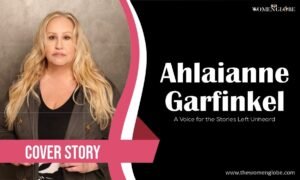
How one woman turned years of adversity, advocacy and an unwavering belief in truth into a platform for voices that deserve to be heard.
When people facing violence, injustice or institutional failure are unable to find the right place to speak, the silence that follows can become another burden to carry. Financial barriers, unequal access to influence and fear can leave survivors searching for answers while their experiences remain unheard. It was this gap that became deeply personal for Ahlaianne Garfinkel, whose own life placed her on the difficult side of speaking up.
Raised to value truth, integrity and doing what is right, she became a whistleblower and spent years facing severe personal challenges, physical injuries, illness, family violence and retaliation. Her professional experience within the court system, along with decades of work helping children and victims, gave her a clear understanding of how power, fear and silence can shape a person’s choices.
Through martial arts, boxing, gymnastics, dance and other competitive disciplines, she developed the mental strength to endure adversity and keep moving forward. Those experiences formed The Unspoken Word, a platform created to give people a voice, provide practical resources and help survivors recognize their own strength.
At its heart, her work rests on a simple belief: every person deserves dignity, safety, respect, and the chance to be heard.
Finding a Voice in Silence
For Ahlaianne, the inspiration for The Unspoken Word grew from overcoming challenges and recognizing that personal experiences can determine both vision and purpose. She believes there are seeds of growth in trauma, and that difficult experiences can become sources of recovery and resilience.
Her inspiration also came from what she describes as repeated retaliation connected to her experience as a whistleblower. Since 2020, she says she has been the victim of ongoing crimes.
Raised to do the right thing and tell the truth, Ahlaianne developed a strong sense of integrity and honour. She learned that reporting events, both good and bad, can sometimes create adversity. Her response was to adapt, modify her direction, find another route and search for a meaningful alternative.
She has also experienced significant life challenges, including physical injury and illness that required emotional strength and cognitive restructuring to maintain precision and focus. She describes these experiences as contributing to her sense of strength, power, integrity and leadership.
As someone who experienced retaliation, Ahlaianne describes encountering unwanted physical incidents throughout her journey. Her long involvement in martial arts, physical activities, skiing, gymnastics, dance and boxing also became an important source of structure and strength. High-level competitive sports gave her discipline, while the physical and mental endurance they developed helped her navigate periods of severe adversity.
Ahlaianne recounts that her home was broken into and that she experienced physical assault, physical violence, a broken neck and multiple broken bones. She also describes incidents involving her car, including a cut steering column, a slashed tire and destroyed brakes. She further observed and witnessed firsthand, her family members being removed from their home, and beds, forcefully, against their will, leading to unwanted hospitalizations.
Those experiences eventually raised a larger question for her: what happens when people lose the ability to speak for themselves?
Giving Silence a Voice
Ahlaianne describes how these experiences left her and others silenced without a place to speak their peace or have their concerns heard within the system. That became part of the thinking behind The Unspoken Word.
As a whistleblower, she has always believed in doing what is right, allowing truth to prevail and confronting injustice. A firm believer in the Constitution, she considers its amendments meaningful, with every person deserving dignity, kindness, respect, honour and integrity.
Her situation, as she presents it, began with what she characterises as multisystemic family violence involving her husband’s sister. Her sister-in-law, she alleges, had significant financial resources and used them to harm and intimidate the family. Evidence was frequently tampered with, while police responding to incidents would describe them as an “inside job.”
The term referred to people knowing security passwords and having access to keys because of the family relationship. Her professional work was also affected. For 30 years, she worked within the court system and had the opportunity to testify before judges in multiple states across the USA, helping children affected by crime and victimization.
She further alleges that her sister-in-law hired a hitman and characterises the attacks as high-level. Through these experiences, she drew on her knowledge, skills, experience, power and strength to overcome barriers and work pre-emptively to avoid conflict.
Her commitment to justice had also extended into advocacy and volunteering, where she found another way to support people and families.
Creating a Place for Others
Ahlaianne has worked to support advocacy by helping people find a voice and ensuring that court reports she prepared were truthful, honest, factual and grounded in integrity. Justice, truth, equality and spirituality have remained important to her, alongside years of volunteering with organizations supporting children, families and animals.
She says her sister-in-law also interfered with these organizations and the work she had undertaken, which Ahlaianne believes was connected to efforts to conceal crimes that were being investigated. She describes third-party communications being used to interfere with criminal investigations.
The experience left her with fear, but it also led her to a decision. She wanted to take a stand, create change and support other victims alongside herself. That became the reason she created The Unspoken Word.
Its purpose raised a broader question about the people who remain unheard and the gaps that can prevent them from reaching a platform.
Closing the Gaps
A platform can mean different things to different people. For some, it may be a public space to tell a story. For others, it may simply mean finding the right person, organization or resource at the right time.
Ahlaianne identified what she describes as financial and political gaps. Many people, she says, lack a venue or platform where they can be heard. They may struggle to know where to go, whom to approach or how to reach major outlets without political or financial influence.
She considers this unfair and discriminatory because she believes everyone matters and deserves respect. Violence, in her view, has no boundaries, and every person should have a fair, equitable, honest and sincere opportunity to live with safety and dignity. Everyone deserves to go to bed feeling safe and wake up secure in their own home.
The Unspoken Word therefore provides what she describes as a resource and toolbox for families, individuals and survivors, including resources and scenarios intended to help restore and empower.
At its heart, she notes, the initiative represents victims who never had the opportunity to speak, people whose experiences remained unheard and individuals from different races, ages, genders and socioeconomic backgrounds who were silenced for different reasons.
For Ahlaianne, everyone deserves a voice. That belief also determined the way she approaches leadership and the people who work with her.
Leading Through Humanity
For Ahlaianne, values matter greatly because integrity matters. Truth matters, and so does ensuring that people are treated with equality in terms of integrity, honour, respect and humanity.
She describes her leadership approach simply: she leads through truth and humanity.
Those principles become especially important when a leader is working within environments where credibility has to be earned while facing personal and professional barriers.
Working Through Gender Bias
Credibility can take time to establish, particularly when personal circumstances and wider social expectations create additional obstacles. For women leading purpose-driven work, those pressures can appear in both visible and subtle forms.
Ahlaianne recounts challenges involving family and systemic violence, financial barriers and what she describes as the actions of a hateful and estranged sister-in-law. She believes financial power gave specific people greater reach and interfered with her ability to access platforms capable of reaching audiences nationwide.
She has also experienced gender bias and emphasises that the divide between genders remains an area society needs to address through greater respect and understanding.
Within her own work, she aims to create an environment where everyone is equal, respected, valued and treated as an important part of the team. She uses a structural family-therapeutic approach and looks at group dynamics through the lens of group power and facilitation, seeking balance and equal footing among members.
Her response to barriers has been to keep creating alternatives: a new platform, a new email, a new website, a new relationship or a new opportunity. For her, expansion has meant continuing to search for another route when one route closes.
That ability to remain steady has also formed how she approaches growth, uncertainty and the emotional demands that come with her work.
The Mind-Body Balance
For Ahlaianne, stability is built through cognitive behavioral techniques. Her background in crisis and trauma, along with her studies in forensic psychology and understanding of criminology, have formed the way she approaches people affected by harm.
She has also applied knowledge gained from working with individuals and victims of sexual crimes, particularly in understanding dynamics of power and control. Strength-based techniques, stopping and thinking, and trauma-focused approaches have all formed part of her work and her efforts to remain safe and stable.
She sees the mind as a powerful tool for directing, integrating, calming, and empowering oneself. The mind-body connection is also central to her thinking, as she maintains that a healthy mind and body working in sync can create greater possibilities
That understanding of the individual becomes especially relevant in a digital environment, where connection can be both immediate and difficult to verify.
Keeping Human Connection Real
Technology has changed how people communicate, but it has also introduced new questions about identity and trust. Behind a screen, it can become harder to understand who is genuine and whether a person or message represents what it appears to represent.
Ahlaianne recognizes that technology can be misused through impersonation, false identities and third-party activity. Her focus, however, remains on empowerment, strength, motivation and overcoming obstacles.
She takes the view that when one platform fails to work, another can be explored. If one network does not provide an answer, another may offer a route forward. She sees possibilities in new platforms, technologies, and support groups, encouraging people to look from the inside out and recognize the opportunities available to them.
In working with clients, she is developing a client advocacy platform designed around the individual needs of each person. She sees every individual as different, special, and gifted, with unique skills and strengths that deserve to be recognized and embraced.
At the same time, she places importance on consistency, reliability, follow-through, and structure. In her view, these qualities cannot easily be replicated by a bot or a false identity behind a screen. Integrity, reliability, and consistency remain human strengths with lasting reach.
Maintaining that kind of authenticity requires close attention to what people say, how they behave and the patterns that emerge over time.
Listening Before Acting
Understanding people often begins before a solution is proposed. The details of what they say, what changes over time and what repeatedly appears in their experiences can provide useful information when examined carefully.
Ahlaianne gathers insights by stopping, looking and listening. She pays close attention to details, puts her work in writing and examines words, structure, trends and patterns.
She also looks closely at follow-through, consistency and reliability. For her, these patterns are present in everyday interactions, and the important skill lies in understanding how to analyse them and use them to develop credible and authentic observations.
That careful attention to people also informs her broader view of leadership, particularly the qualities she believes create influence and lasting impact.
The Human Side of Influence
Influence can be measured in many ways, but the way people feel they have been treated can remain with them long after a particular interaction has ended. For Ahlaianne, this makes humanity central to meaningful leadership.
She sees a humanitarian approach as a way to reach a broader audience, recognizing that people generally want to be treated with respect, kindness, and honour. As she puts it, kindness costs nothing and being nice is free.
She also points to the role of inner feeling and intuition in how people, children, and animals respond to the world around them. In her view, lasting social impact comes through behaviour as well as intention, because human nature can recognize genuine intentions.
Her message is simple: follow your instincts. She regards those instincts as an important guide in navigating both personal and professional life. That emphasis on intuition has also been shaped by the education, professional experiences and philosophies that have influenced her own approach.
Educating from Many Disciplines
Leadership develops through a combination of formal learning and lived experience. Different fields can offer different ways of understanding behavior, decision-making and the relationships between people.
Ahlaianne’s leadership has been influenced by individuality, analysis, awareness, self-awareness, cognitive and behavioral techniques, the mind-body connection, physiological responses and instinct.
Her education includes time at the University of South Florida, through which she obtained a Bachelor of Arts degree in psychology with a specialization in neuroscience. New York University, including becoming a certified social worker through this platform.
At Fairleigh Dickinson University, she obtained a clinical degree at the graduate level, including a master’s in clinical counseling with a specialization in crisis and trauma. Ahlaianne became credentialed through a nationwide credentialing platform that she still holds, which allows practice in all 50 states within the United States of America.
At the University of Virginia through the Institute of loss, psychiatry, and public policy. This is alongside numerous forensic training programs, including working with at-risk populations and specialized training in sexual violence.
In addition, Ahlaianne is a credentialed perinatal mood specialist and is credential to serve as a perinatal mood instructor working with postpartum mothers to assess for safety, welfare and stabilization. She describes these experiences as enriching her life and allowing her to learn from other professionals while embracing the learning opportunities available to her.
Finally, after participating in specialized mediation, training, and conflict mitigation at Rutgers University, Ahlaianne became a court-approved mediator working with thousands of clients. Serving as a court professional and testified in the Superior Court for over 100 matters, and has been appointed for thousands of individuals, couples, and families, while working for three decades with the court system in multiple states within the United States of America.
Currently, the focus is writing books and providing nationwide coverage, utilizing the knowledge, skill, experience, credentialing training, and hardship to empower others and make an imprint. Ahlaianne has worked with thousands of youths over the course of three decades, providing guidance, direction, empowerment, encouragement, and utilizing a mind, body, healthy mind, healthy body technique to integrate art, science, music, martial arts, modeling, and acting.
Teaching has become an important part of that learning. In her work, she teaches people how to respond internally, rely on themselves and recognize internal cues as guides.
Learning, sharing, exchanging information and embracing group dynamics are among the skills she teaches her clients. She also places importance on harmony, respect and balance, believing that a harmonious environment can create positive outcomes.
Those lessons now feed into her plans for The Unspoken Word and the wider platform she hopes to develop in the years ahead.
Turning Experience into Hope
The future of a purpose-driven initiative often depends on whether its message can reach people beyond the immediate community around it. For Ahlaianne, that means creating more opportunities for people to share experiences, exchange information and find support.
One of the next steps is a podcast titled “Overcoming Adversity: The Power of Networking,” scheduled for launch in October 2026. She has selected a podcast partner who has also experienced trauma, barriers and adversity involving racial, gender and legal challenges.
Together, they plan to create what Ahlaianne describes as a sounding voice that can share information, provide support and create a vibrant, robust and honest platform.
Learning through experience, sharing those experiences and giving hope to others are among the major goals of the podcast. The same philosophy forms the advice Ahlaianne offers to women who are beginning their own leadership journeys.
Start From Within
For anyone trying to build something meaningful, the pressure to look outward can become overwhelming. There are markets to understand, people to reach and expectations to meet, yet Ahlaianne believes the starting point should remain personal.
She advises young leaders to search from the inside out, trust themselves, rely on their instincts and stay connected to their inner vision and goals. She trusts that what a person feels can be transformed into action.
Through her work, she teaches specific techniques designed to help people identify, analyse and use their strengths, inner goals and power while pursuing a high level of honesty and integrity and creating a sincere platform for others and like-minded individuals.
Her advice comes down to four principles:
- Be true.
- Be honest.
- Set realistic goals.
- Surround yourself with people, places and things that enrich you, empower you and help you understand your worth.
For Ahlaianne, the purpose of The Unspoken Word ultimately rests on the belief that people deserve the opportunity to be heard, understood and supported, and that finding a voice can itself become a form of strength.