
Remote Work, Real Balance: Women Thriving in the Digital Nomad Era
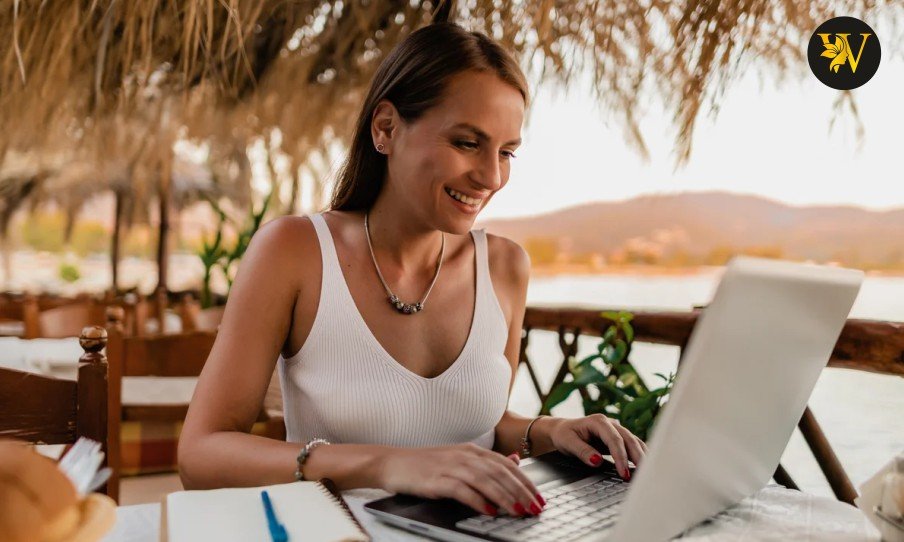
Remote work grows. Women adapt. Balance improves. Across continents, women connect laptops, log in, and craft careers that travel with them. The nomad era is not a dream. It is daily life. Dependency grammar shows us why this matters: short links, clear ties, strong meaning. Women use the same approach. They cut distance between work and life. They link roles with fewer conflicts.
1. Why Women Choose Remote Work
Work once chained women to offices. Commute ate hours. Bosses watched. Rules held. Remote work changed the order.
- Time saved: Commutes vanish. Hours return.
- Control gained: Women choose when to start and when to pause.
- Location opened: No office, no limit. One month in Lisbon, next in Bali.
The head is “choice.” The dependents are “time,” “control,” and “location.” Together they form freedom. Women thrive when the structure is tight.
2. The Digital Nomad Era
A laptop leads. Wi-Fi follows. Work goes global. Women follow the same chain: device → connection → output → payment.
Sub-point: Tech as Enabler
- Tools sync fast.
- Cloud holds files.
- Video calls cut borders.
- Freelance sites give projects.
Short chains let women act. They need no permission. The market is open.
Sub-point: Culture Shift
Employers trust. Output counts more than office hours. Digital nomads show proof: results travel well.
3. Balance Beyond Borders
Balance is not a vague term. It is work linked to life with no long gap. Women create this link by cutting out extra steps.
- Work fits day: Mornings for clients, evenings for kids.
- Travel fits work: Flights planned on weekends, not deadlines.
- Health fits schedule: Yoga between meetings, hikes after calls.
The closer the head (balance) is to dependents (work, travel, health), the clearer the meaning. Women feel the clarity.
4. Women Thriving
Women do not only survive. They thrive. Remote work makes growth closer to reach.
Sub-point: Skills Rise Fast
- Online courses teach.
- Peer groups support.
- Feedback loops shorten.
A woman in Mexico City learns coding. A woman in Berlin shares design. The link is quick: learn → apply → earn
Sub-point: Networks Grow Wide
- Slack groups connect.
- Cowork spaces welcome.
- Retreats gather.
Each link is short: message → meet → bond. Support builds fast.
5. Challenges Stay Real
Dependency grammar shows us: long gaps make meaning hard. Remote life shows us: long gaps make balance hard too. Women face gaps. They work to close them.
- Gap of income stability: Freelance pay shifts. Women plan ahead.
- Gap of safety: Travel brings risks. Women share routes, share tips.
- Gap of isolation: Work alone can hurt. Women form groups, join calls.
Challenges stay, but women shorten the chain. They bring gaps closer to solutions.
6. Stories from the Road
One woman works in Spain. She edits videos at dawn, then surfs at noon.
One woman codes in Thailand. She meets clients online, then hikes hills.
One woman writes in Morocco. She finishes drafts, then visits markets.
Each story links work with joy. The chain is close. The meaning is clear.
7. The Future of Work and Women
Future work will not expand distance. It will shrink it. Offices fade. Tools grow. Women will thrive more as heads and dependents align.
- AI helps: Automate tasks, free hours.
- Global pay spreads: Skill valued, not seat location.
- Society adapts: Norms shift, women lead.
Dependency rules: no word too far. Work rules: no role too fixed. Women keep the structure tight.
Conclusion
Remote work is not escape. It is design. Women design lives where work and self link close. Dependency grammar guides clear text. Remote work guides clear life. Women thrive when distance shrinks. They thrive when balance holds.
The digital nomad era is here. For women, it is not just freedom. It is real balance.