
Sam Mishra: Teaching the Science of Healing Touch
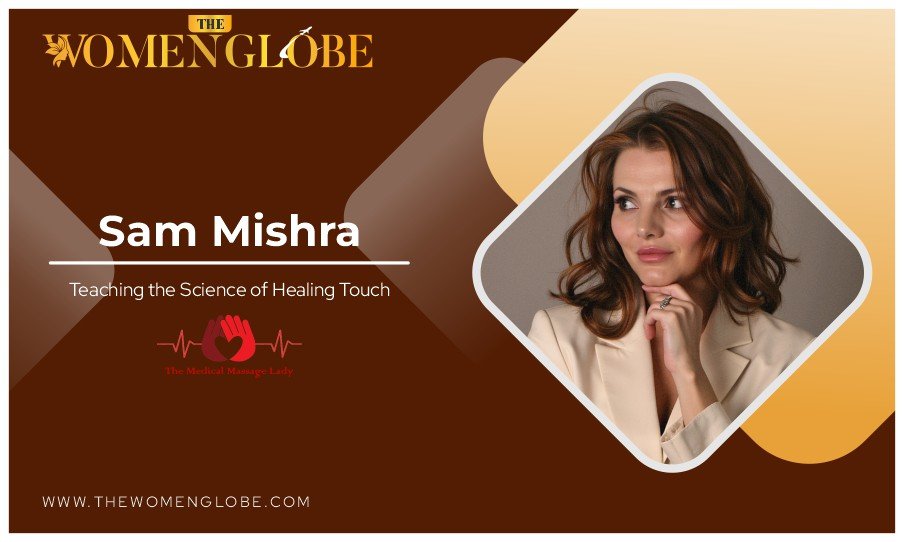
Creating treatments and training that combine medical knowledge with therapeutic care.
There are moments in life when the weight of pain feels too much for words. Sometimes all it takes is a hand on your shoulder, a touch that says you are not alone. Healing often begins not with medicine, but with care that reaches deeper than the physical.
For Sam Mishra, this understanding did not come from textbooks or training manuals alone. It came from years spent on hospital wards, from nights holding the hands of women in labor, and from a personal journey marked by both love and unimaginable loss. Her story is one of resilience; of finding a way to keep caring, even when her own world fell apart.
Sam’s path to healthcare was not straightforward. After school, she was uncertain about her future. Catering and art both crossed her mind, but life steered her toward occupational therapy. She stayed for two terms before realizing her heart lay elsewhere. She wanted to be at the center of treatment, not just assessment. That choice led her to nursing, and later midwifery, where she discovered a true passion for women’s health.
Her career, however, shifted when her daughter was diagnosed with a disability. Sam Mishra stepped away, planning only a short pause. One year turned into nine as she devoted herself entirely to her children. And then came the heartbreak no parent should endure, she lost them. The grief left her in darkness for years.
“I knew I had to get out of the reclusive phase I was in,” she shares. “If I did not move forward, I would not still be here.”
It was during this fragile stage of rebuilding that something from her past offered a way forward. Years earlier, while on a break from nursing, she had taken a massage course. At the time it was simply to keep her mind active, but the knowledge stayed with her. Returning to nursing proved far harder than expected after so much time away. So she chose another path; using massage as a bridge between her medical background and her desire to help people.
Her first job back was at a franchise, and the cracks were obvious. Training was shallow, standards were low, and clients were not receiving the quality of care they deserved. “Two-thirds of clients were coming in with medical issues or sports injuries. It was not just pampering anymore. People needed more, and they deserved more.”
Soon clients began asking specifically for “the medical lady.” They trusted her expertise, and she could see the difference her approach was making. That was when she knew she had to create something of her own.
Sam Mishra built her practice around the belief that massage could be more than a luxury, it could be a form of meaningful care. When the pandemic gave her unexpected time, she used it to write training manuals. Her goal was clear: to give therapists the depth of knowledge they needed to adapt treatments safely and effectively, no matter the client’s condition.
Today, Sam’s work is reshaping how massage therapy is viewed. She trains others not just to perform a technique, but to understand the body and the person in front of them. It is a blend of compassion and science, of experience and purpose.
Her journey has been marked with loss, but out of that loss came clarity. Healing is not only about physical touch, it is about dignity, empathy, and restoring quality of life. And that is exactly what Sam Mishra has committed her life to bringing back into the world.
Shaped by Struggles, Rising into Leadership
Sam Mishra never grew up with ambition or the thought of becoming a leader. As a child, Sam Mishra was shy, introverted, and often experienced social anxiety. It was only in recent years that the impact of childhood became clear. Growing up without a father and with a narcissistic mother meant there was no affection, no words of love or pride, and constant dismissal of opinions. This absence of support deeply affected self-confidence and shaped early relationships.
That difficult dynamic led to an abusive marriage. Believing that marriage would provide protection and care, Sam Mishra instead faced nine years of abuse, feeling unable to leave even while knowing that life was not meant to be this way. The realization that it was abuse only came later. After enduring three unsuccessful pregnancies, the arrival of two children finally gave Sam the strength to walk away, especially when neglect began to affect them.
However, personal healing had not yet begun, and another marriage followed five years later. That union was short-lived and ended with the devastating loss of both children, altering life forever. The depression that had started in teenage years and was formally diagnosed at nineteen after a nervous breakdown and self-harm, escalated further. The trauma from upbringing, compounded by abuse and later the loss of children, deepened into complex PTSD and prolonged grief that continues to this day. A second nervous breakdown brought thoughts of ending life, with no clear path forward.
Going through such pain with little to no support could either destroy or transform a person. Sam Mishra found a way to rise. The determination to work with trauma, domestic abuse, and childhood disability came from lived experience, coupled with a strong foundation in medical training. Choosing self-employment through massage therapy created space to work in areas that mainstream spas and franchises would not allow. Over time, this independence enabled training in chosen fields and building a professional identity rooted in authenticity.
Unlike many, Sam Mishra did not wish to present a purely formal or detached professional front. By being open about personal trauma and struggles, Sam Mishra became more relatable, creating an environment where clients could trust and connect. This made therapy more accessible to those who needed it most.
Two years ago, Sam Mishra was invited to contribute to an international magazine. The freedom to write about any subject began with massage but evolved into articles on trauma and mental health. This also became the focus of MML Talks, a podcast dedicated to difficult and often stigmatized subjects, both in society and in the massage industry. By addressing these boundaries, Sam challenged their existence and encouraged open dialogue.
This openness drew recognition. At the start of this year, Sam Mishra received the first global award, followed by another in June, along with several regional and national honors. With this recognition came greater visibility, leading more people to learn about Sam’s work and mission.
The term “leader” was something Sam Mishra only began to associate with after receiving global awards. Recognized for therapeutic innovation, educational leadership, and community service, these acknowledgments reflected qualities never imagined to belong to someone once shy, anxious, and uncertain. Leadership, for Sam Mishra, was never intentional. It emerged through resilience, authenticity, and a determination to transform pain into purpose.
Evolving Vision Shaped by Healing and Purpose
In the beginning, her work as a self-employed practitioner centered mainly on massage and the application of medical experience. Over time, that focus expanded into a much wider holistic practice. Today, her offerings include breathwork, hypnosis, transformation coaching, Reiki, aromatherapy, and a range of other treatments. She also conducts workshops, with trauma healing and transformation coaching emerging as a central part of her work. Various motivating forces continue to guide and inspire this path.
Through her training programs, she emphasizes the importance of therapists pushing boundaries set by both society and the industry. She believes therapists should aim to dismantle stigma while broadening their skills through advanced, specialized training. According to her, it is insufficient to complete a single course and declare oneself a therapist. The role carries the privilege and responsibility of caring for people’s health, with the potential to create genuine change both in the industry and in clients’ sense of agency. She often reflects on the words of Maya Angelou: “Do the best you can until you know better. Then when you know better, do better.” Practical skills may allow someone to carry out massage, but knowledge holds the power to transform both the practitioner and the client. This philosophy fuels her dedication to offering training courses.
One of her most meaningful contributions has been a massage course designed for children with cerebral palsy, inspired directly by her daughter. As a parent of a child with special needs, she experienced firsthand the difficulty of finding effective, affordable, and accessible treatment. When clients from distant locations sought her expertise, she discovered there were very few therapists in the United Kingdom equipped to provide similar care. This realization led her to create a training program to prepare more therapists to serve children with disabilities.
Her charity work and trauma-focused practice hold deep personal significance. They symbolize resilience and victory over past struggles marked by a narcissistic mother, abusive relationships, complex grief, depression, self-harm, and chronic pain. Although her story contains elements shared by many women and men who have endured abuse, her contribution has been to transform those experiences into systems of awareness and change. The impact of this work is multiplied through her most popular course in trauma training. Every therapist who completes it goes on to support survivors, and each survivor who heals contributes to breaking cycles of trauma in families and communities.
Through this work, she continues to build a legacy of purpose, turning personal pain into a force for healing, knowledge, and transformation.
Overcoming Barriers to Leadership Through Self-Acceptance
Growing up with a narcissistic parent and another absent, followed by an abusive marriage, left her without a sense of identity. Her self-esteem was severely diminished, and confidence in her own judgment became fragile. Messages that she would never achieve anything, that her opinion carried no value, and that no one would want her, shaped much of her twenties and thirties.
Although academically strong, she struggled with social anxiety and an introverted nature. By the age of 49, she had lived with depression for over three decades and with complex PTSD for at least two. These conditions affected her short-term memory, making tasks such as writing articles far more difficult, even though the knowledge remained.
The turning point came through years of work on her own trauma. She learned to make sense of both the significant and seemingly minor experiences that shaped her life. This reflection led to an important realization: external factors such as environment, possessions, or career do not define identity. True transformation lies in the internal work, even when it is uncomfortable.
Living with nervous system dysregulation and CPTSD meant constantly pushing against what felt safe. That process was both triggering and challenging, yet deeply rewarding. For years, fear of imperfection and external judgment dictated her path. Only in recent times did she discover liberation in releasing the need for validation. No longer trying to fix everything that others claimed was wrong, she began to embrace herself fully.
Through this acceptance, she found her purpose: to love herself and others for all that they are, with both strengths and flaws. Strengthening connections with those who accepted her for her humanity became central to her journey.
With lived experience as her foundation, she believes she is now in a stronger position to lead by example.
Balancing Responsibility with Authenticity
Balancing the weight of responsibility while staying true to personal values emerged for Sam Mishra as a pressing issue recently, particularly concerning a safeguarding matter with one of her trauma clients. With trauma clients, ensuring safety and establishing clear boundaries remains a top priority. Having experienced abuse and living with PTSD, setting boundaries presented a personal challenge for Sam, yet she has been improving in this area. Learning to say no has been a significant step, shaped by a history of chronic people-pleasing and experiences as a parentified child. She has discussed this struggle in her podcasts, highlighting the difficulty the word no has always presented.
In this specific situation, the client required considerable support, but an incident left her feeling unsafe. Sam Mishrarespected her experience and agreed with the decision to pause therapy, also recognizing that continuing to offer support at that moment would not have served the client’s best interest. The challenge lay in adhering to professional boundaries while her instinct as someone who has endured trauma herself was to provide constant reassurance. She felt the desire to message the client and offer ongoing support, yet she recognized that maintaining boundaries remained essential. To ensure the client’s well-being, Sam Mishra arranged for support from alternative sources.
Even though she initially experienced the natural feeling of having let the client down, she reflected on the core reason she pursued this work: to ensure that survivors of abuse receive support she wished she had. Over several days, she understood that upholding boundaries constituted the right action for the client, even if the client remained unaware of this fact.
Sam Mishra emphasizes that finding balance, particularly after trauma, rarely comes easily. It involves ongoing effort and making the best use of available resources. A guiding force in her practice has been her clients’ trust and belief in her, which she describes as a source of strength and clarity. Observing herself through their perspective helps reset her mindset, providing reassurance that moments of struggle do not indicate inadequacy; they reflect human experience.
She also highlights the power of internal dialogue in achieving balance. Adjusting self-talk can reset the nervous system, facilitating steadiness in other areas of life. The focus lies on introspection rather than external validation, examining triggers, understanding their origins, and reflecting on past influences shaping present responses. Sam Mishra acknowledges that this remains an ongoing process, unique for each individual.
Power of Community and Giving Back
Sam Mishra reflects on the profound influence of mentorship, community, and support networks on her journey. Formal professional mentorship in her current field has been limited, with the exception of group-based training where each team had a mentor. One particular mentor sparked her enthusiasm for transformation coaching and shaped her approach.
Her clients have played a crucial role in her growth, offering honest feedback and unwavering support. Their loyalty and recognition of her work reinforce her sense of purpose and value. Repeated affirmation from clients provides motivation to continue refining her services, pushing her personal and professional development forward despite any self-doubt or past trauma.
Community engagement forms a central part of Sam’s work. Her dedication has been recognized with the Global Recognition Award for contributions to community service. Over the past three years, she has raised more than £12,000 for various charities, focusing on organizations that support vulnerable populations. Partnerships include Bloody Good Period, addressing period poverty; Savera UK, supporting survivors of honour-based abuse and FGM; the Helen Bamber Foundation, aiding those who have experienced torture and trafficking; and domestic abuse charities such as Look Ahead and the Rape Crisis Centre.
Sam Mishra also provides six-month complimentary therapy to survivors of domestic abuse, sexual assault, refugees, and disadvantaged youth, receiving referrals through partner charities. This demonstrates her commitment to making therapeutic care accessible to all, regardless of financial circumstances.
She emphasizes that his professional achievements, therapeutic innovation, and educational leadership combine with her community engagement to create a lasting impact on both individuals and the wider society. Sam Mishra acknowledges that her own recovery from trauma has been deeply intertwined with her work with clients, learning as much from them as they gain from her guidance.
Through national and local charitable initiatives, including donating over 2,000 sanitary products to a food bank, Sam expresses gratitude to clients and organizations who collaborate with her. By offering free therapy and sharing her story, she hopes survivors of abuse recognize their potential to move from victimhood to resilience. She aspires for them to gain confidence, see themselves as survivors, and, ultimately, be inspired to support others in similar circumstances.
Mentorship, Community, and Giving Back
Sam Mishra has not had formal professional mentors in terms of the work she does now, apart from some training sessions where participants were divided into groups, and each group had a mentor. That particular mentor sparked her enthusiasm for transformation coaching and shaped her early approach.
Her clients have been incredibly supportive, often providing honest feedback even when they know she might not agree with them. Their loyalty and recognition of the value she brings reinforce her sense of purpose. Listening to their affirmations serves as a reminder of her worth, and when so many people express the same sentiment, she finds motivation to continue offering her services and pushing her own development further, regardless of any self-doubt or past conditioning.
Community work has played a significant role in her journey over the last few years. She received the Global Recognition Award for her contributions to community service and has raised over £12,000 for various charities during this period. Community service remains central to her practice, particularly supporting charities that work with vulnerable populations.
She has partnered with organizations such as Bloody Good Period, which addresses period poverty; Severa UK, which supports survivors of honour-based abuse and FGM; the Helen Bamber Foundation, which aids those affected by torture and trafficking; and domestic abuse charities such as Look Ahead and the Rape Crisis Centre. For several years, she has also offered free six-month therapy for individuals referred through charities, including survivors of domestic abuse, sexual assault, refugees, and disadvantaged youth. This approach reflects her commitment to making therapeutic care accessible, ensuring financial circumstances do not limit access to quality support.
Sam Mishra believes that her consistent community engagement and fundraising, combined with her professional achievements, therapeutic innovation, and educational leadership, demonstrate the lasting impact of her work on both individuals and the wider community. She often emphasizes that a significant part of her own recovery from trauma has come through her work with clients, learning from them as much as they learn from her.
Through charitable initiatives, whether on a national or local scale, she expresses gratitude to clients and partner organizations. For instance, she donated over 2,000 sanitary products to a local food bank in urgent need. She hopes that by providing services such as free therapy sessions for survivors of abuse and sharing her own story, individuals who have experienced trauma can recognize their potential to move from victimhood to resilience. Her ultimate goal is for them to see themselves as survivors, regain their sense of self-worth, and feel empowered to help others in similar circumstances.
Navigating Leadership Beyond Labels
Sam Mishra said that she never thought of herself as a leader. It was only through receiving the Global Recognition Award in January and then the CREA Global Award in June that she began to realize that she carried the label of a leader. She still finds it quite funny because she never grew up with ambition or the belief that she could be someone or serve as an example. Therefore, she has not really seen it as a challenge, as she is simply doing the work she wants to do. Leadership was never her goal; she pursued it because she recognized a call for it and wanted to help certain groups of people. If people view her as a leader, she finds it nice to hear, but it is not something she ever set out to achieve.
If she were to mention one challenge, it would be that once the label is assigned, there can be an added pressure to feel that she must live up to it. There is a sense of, “well, okay, what can I do now?” There is a pressure to constantly improve or do more, sometimes not because of personal desire but because of perceived expectations from others.
She recounted a discussion with someone who also coaches extensively. They talked about what defines a good leader. Traditionally, a leader was seen as a business head in a top position; formal and knowledgeable about policies and background information. They discussed how leadership actually requires more vulnerability and humanity. These qualities have always been a part of her professional role; she is naturally sensitive, emotional, and open to sharing her experiences. She believes that if sharing her life helps someone else, it is worth doing.
Sam Mishra emphasized that being labelled a leader has not required any change in her approach. She will continue being herself, and people may appreciate it or may not. What matters is that she presents her authentic self, which she believes is all anyone can do.
Understanding Leadership from a Female Perspective
Many women believe that men receive more opportunities, which can limit their own growth. While this holds true in certain instances, Sam Mishra observes that women often unconsciously hold themselves back. Judgments of other women can stem from personal conditioning or insecurities, which frequently interfere with professional development. Emotional awareness, while a strength, can sometimes amplify these insecurities.
Women encounter challenges such as balancing work and life, misrepresentation, lack of recognition and mentorship, imposter syndrome, and pay disparities. Sam Mishra emphasizes the importance of recognizing the unique perspectives and problem-solving abilities women bring to leadership. Inclusive workplaces and collaborative leadership approaches enhance team dynamics and organizational strength. Women’s leadership often focuses on connection, accountability, and authenticity, contrasting with the competitiveness and assertiveness commonly associated with men.
Evolution of Women’s Leadership
Leadership is not just what one says, it is what one consistently does. It lives at the intersection of words and actions, where integrity meets follow-through. When a message inspires and behavior aligns, trust is built. That is how momentum is created, not through titles, but through intention.
Hiring people for experience while teaching only basic people skills will not create leadership because communication plays a major role in trust and respect.
Leadership is not about checking boxes; it is about modelling values, even when no one is watching. The most impactful leaders do not just talk about culture, they embody it.
The best leaders are often those who have a real understanding of people through lived experience, who lead by example, and who take accountability not only for a team, but, more importantly, for themselves. It is not women who need to evolve; rather, organizations themselves may need to adjust their definition of leadership.
When Sam Mishra trains other therapists, the emphasis is not only on gaining knowledge and practical skills, but also on connection with people and the image they want to project in terms of their business. Often, that means less of the traditional formal approach and one that is led by compassion and empathy.
Defining a Lasting Influence in Therapy and Society
Sam Mishra hopes that by modernising therapeutic practices, developing specialised services rooted in medical and surgical knowledge, and continuing to offer comprehensive training programs, new standards for inclusive care will emerge within the industry, benefiting both present and future generations. She believes that holistic healing achieves its true potential only through complete systems that uphold medical standards while embracing innovative methods addressing physical, mental, emotional, spiritual, and energetic wellness.
To further develop the integrated healing and post-surgical rehabilitation process initiated last year, Sam Mishra encourages new therapists to challenge social and industrial boundaries, pursue advanced specialist training, and openly discuss prevailing stigmas. Through participation in training programs like hers, therapists will recognise the importance of combining medical and surgical knowledge with practical skills, greatly expanding access to specialised care across the UK and beyond. This approach ensures that clients receive more comprehensive treatment while reducing reliance on conventional medicine.
Sam Mishra also believes that pairing this methodology with community service amplifies its impact. It sets consistent new standards for excellence within the therapy sector and beyond, influencing not only individual practitioners but also creating broader systemic change in healthcare. Her vision ensures that every person, regardless of background or resources, has access to meaningful therapeutic care.
Transforming Pain into Purpose
Healing represents a journey that evolves with each day, each client, and every moment of connection. Sam’s personal experiences with depression and self-harm shape her empathy and inform the way she leads. Her leadership draws strength from past trauma, which increased her capacity to hold space for others, allowing them to process their own pain. Chronic pain from years of endometriosis has taught her about the body’s memory and its remarkable ability to adapt and heal. The grief of losing her children has deepened her understanding of loss and resilience, equipping her to support others through their darkest moments.
Trauma does not define identity, limit worth, or restrict potential. Those experiences, while challenging, have become the driving force behind her contributions, empowering her to become who she is meant to be. By finding purpose in pain, Sam Mishra sets an example for the industry, the public, those who caused her harm, and most importantly, for herself, demonstrating that her story and survival carry immense value. Her ability to guide others through their darkness creates an immeasurable impact that inspires countless individuals.