
The Evolution of Women’s Rights: From History to Modern-Day Movements
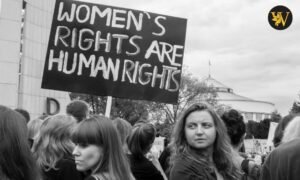
The saga of women’s rights is long and multifaceted. For centuries, women lived under patriarchal social structures that marginalized them from resources like education and property ownership, and public spaces such as political life.
The newest Global Gender Gap report by the World Economic Forum estimates that global gender parity may still take 130 years (or longer) to be fully achieved, assuming the pace continues to progress as it is currently. This number emphasizes how far we’ve come, but also how far we have to go. Understanding the history and evolution of women’s rights enables us to see where we are now, how far we’ve come to achieve that, and how many challenges remain.
The Early Struggles for Women’s Rights
Women’s history has been in existence long before our own, in many societies women were not seen as equal to men and had little or no power to make decisions. For instance, women in ancient Greece were unable to vote, hold a title of land, or engage in dialogue in public spheres. In terms of civic or political life, the home was “where a woman belonged.” For women in Medieval Europe, laws often determined that those identities depended on fathers or husbands. In this case, as opposed to being publicly equal, their identities were deprived of autonomy altogether.
The early signs of change had also begun. Women in various cultures and settings were often able to navigate around the limitations set before them. In the 12th century, Eleanor of Aquitaine was undoubtedly a significant figure publicly shaping elements of political life in France.
Women’s Rights in the Enlightenment Era
The age known as the Enlightenment period in the 17th and 18th centuries served as an inflection point for women’s rights history. The ideas of liberty, equality, and rational thought spread through Europe and the Americas. Philosophers such as John Locke and Jean-Jacques Rousseau debated the rights of citizens, even though women continued to be largely excluded from these discussions.
In Britain in 1792, the writer Mary Wollstonecraft published “A Vindication of the Rights of Woman” where she argued that women deserved an education equal to that of men. This work was one of the first robust foundations for modern feminist thought. Simultaneously, women began participating in public life more openly by opening salons, writing books, and supporting revolutionary causes. This was also the beginning of women questioning their exclusion from society.
The Fight for Women’s Suffrage
During the 19th century, one of the most important periods in women’s rights history occurred – the call for voting rights. The suffrage movement had developed in the United States and Europe, with key figures such as Susan B. Anthony, Elizabeth Cady Stanton, and Emmeline Pankhurst leading the battle.
In 1893, New Zealand became the first country to enfranchise women, which sparked campaigns all over the globe. The United States established the right to vote in 1920 with the passage of the 19th Amendment while many countries subsequently deregulated women’s suffrage, and some countries didn’t allow women the complete right to vote until the late 20th century. The establishment of the right to vote was not only a legal change; it was a representation of women’s entrance into the political sphere and the recognition of women as equals.
Women’s Rights and Education
Education has been critical to the advancement of women’s rights. For many generations, access to schools was denied to girls or they received a token education compared to boys. After the various societies became industrialized in the 19th century, the demand for educated workers increased, leading to a gradual opening of educational institutions for women.
Education campaigns in many nations have a rich history, with leaders who fought, and made great sacrifices, in the name of equality for women and girls. Savitribai Phule in India and Malala Yousafzai in Pakistan are two strong figures representing this movement. The common ground between their fight against injustice in education and that for equal access to education is paramount to their campaign for women’s rights. Today, we can see improvements in literacy rates among women on a global level; however, much work remains to achieve gender parity in areas of education, and women must continue to be legally and politically empowered in areas of education access. Education empowers women; this notion remains exemplified in contemporary campaigns where equal (or equitable) access to education for women and girls remains the focus.
Women’s Rights in the Workforce
The next milestone in women’s rights history was entering the workforce. Millions of women entered factories, offices, and healthcare sectors during World War I and World War II and filled the jobs of men going to war. This demonstrated to the world that women could do a job that was traditionally done by a man.
When the wars were completed, there was a belief that women would return to the home. However, the idea of being economically independent had taken hold. By the 20th century, there were more labor laws enacted to protect women from discrimination in the workplace. Equal pay acts, maternity leave rights, and anti-harassment laws became enshrined in law in many parts of the world. Today we see women in all areas of work, from science to politics, sports to business, but the battle against the gender pay gap and the glass ceiling are just two issues that modern women’s rights movements continue to fight.
Women’s Rights and the Second-Wave Feminism
In the mid-20th century, second-wave feminism emerged with a broader agenda for women’s rights. While the first wave was primarily concerned with voting rights, second-wave activists pushed for reproductive rights, workplace equity, and legal reforms, among other issues.
Activists such as Betty Friedan and Gloria Steinem emerged as prominent voices, articulating the need to take action against issues of pay inequity, domestic violence, inequality in leadership positions, and so forth. The second wave also challenged culture, offering critiques of traditional gender roles to encourage society to reconsider these roles. Second-wave feminism changed the law, policy, and social attitudes towards women.
Women’s Rights in the Digital Age
The digital generation has added dimensions to women’s rights history. Social media channels have become a powerful platform for awareness and activism. Campaigns like #MeToo and #TimesUp have facilitated global conversations about sexual harassment, safety in the workplace, and accountability.
Technology has also afforded women avenues for careers, entrepreneurship, and the creation of communities across the globe. Online education has helped open doors for girls in regions where schools do not exist. These advances do not come without a downside and societies also face challenges in the digital space in the form of cyberbullying, online abuse and the lack of digital access in specific communities. Women’s rights in the digital age are presented with opportunities and challenges which society is constantly negotiating.
Modern-Day Women’s Rights Movements
These days, movements focusing on women’s rights cover a broad spectrum of issues. These issues encompass reproductive health, equal pay, inclusion in power structures, violence protection, and education. These issues are acted upon on a global scale by agencies such as UN Women, from a national level or on a more grassroots scale through local campaigns, and they all are reaching for the same goal: gender equality!
For example, Rwanda has one of the highest percentages of women in parliament, and this underlines how movement and policy impacts can reshape societies. A more contrasting example would be the many countries where cultural and legal barriers remain that inhibit women from complete freedom. Modern day women’s rights movements are also recognizing the intersectionality of women’s issues and are taking care to highlight that women experience discrimination differently based on their race, class, religion, or geography.
The trajectory of women’s rights from historical values to contemporary movements demonstrates a winding path of persistence and change. Progress has been slow and sporadic, from the constraints of ancient society to suffrage to education to workplace equality to online activism. With every generation, the fight has continued so that women have more voice, choice, and opportunities than ever before.
The future of women’s rights rests with each of us. The legality of women’s rights does not ensure equality; And equality in law, must be culturally-bound and sustained. The benefits of addressing women’s education, health and leadership flow through to entire communities. The journey is not finished; however in today’s context, the groundwork is stronger than it has ever been. The unfinished business now is making sure that equality is not simply the principle of a legal document, rather a way of life collectively experienced by women in every corner of the globe.